19/10/2026 10:19
Will This Hinge Fit? A Telegram Channel Comments Workflow for Cambodian Hardware Shops

A cabinet hinge photograph can attract attention without answering the shopper’s real question: will this fit the door already at home? For Cambodian hardware shops promoting products through Telegram, channel comments can put useful questions beside the relevant product. They also create work: someone must check specifications, distinguish public answers from private order details and correct misunderstandings. This guide uses a hypothetical Phnom Penh hardware shop to explain a manageable workflow. It also shows where an SMM panel member offer fits into the decision—and why a larger member count cannot establish that shoppers understand a product or intend to buy it.
1. Decide whether public product discussion serves the shop
Start with the questions customers already bring to the counter. Questions about included screws, available finishes or how to identify a hinge model can produce answers that help several readers. Questions about a particular delivery, payment or customer address belong in a private conversation. Comments are most useful when the shop has reusable product knowledge and someone who can explain it accurately.
In this hypothetical example, the shop posts cabinet fittings and drawer accessories. Its owner wants customers to ask about the pictured item before travelling across Phnom Penh. The intended outcome is a clearer buying decision, including the decision that a product is unsuitable. Define that purpose before opening discussion. If staff cannot check questions during advertised working hours, improve the product posts and private contact route first. An unattended comment section can leave uncertain guesses beside the shop’s own information.
2. Understand the channel and discussion-group connection
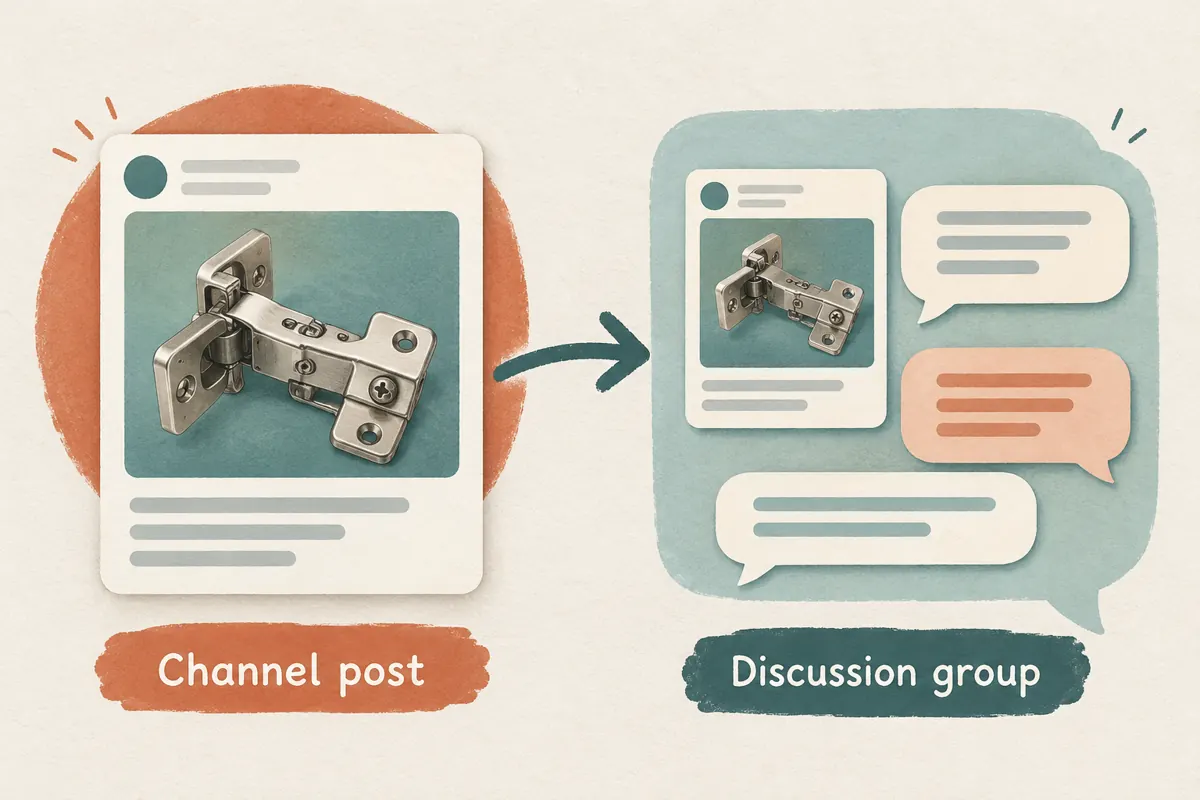
Telegram’s Channels FAQ explains that linking a discussion group adds comments to channel posts. Comments appear in their own thread and also in the discussion group. Think of the channel as the product display and the linked group as the conversation space behind it. Staff should understand both views before directing customers there. Source: https://telegram.org/faq_channels
Telegram documents the setup entry point as Channel Settings > Discussion. Use the available controls in your app to choose an appropriate customer discussion group, then inspect the result. Do not link an internal staff group containing supplier discussions or customer records. Telegram’s technical documentation says linking a discussion group requires access to its old messages to be enabled. A dedicated group avoids carrying unrelated history into the customer experience. Sources: https://telegram.org/blog/filters-anonymous-admins-comments and https://core.telegram.org/api/discussion
3. Rehearse the complete question-and-answer path
Before promoting the channel, publish a clearly labelled staff test post and ask a colleague using an ordinary member account to open its comments. Have them ask a harmless product question. Reply from the intended staff identity, then inspect the exchange from both the channel and group. Check that the colleague can recognise who represents the shop and locate the answer without assistance.
Use this rehearsal to uncover practical problems: a confusing group name, missing moderation access, unclear contact instructions or staff replying outside the intended thread. Record only the settings and observations needed to fix those problems. Do not treat a successful administrator test as proof that customers have the same experience. Finish by assigning a primary responder and a backup. Both should know where unanswered questions are reviewed and who can verify a technical claim when the counter is busy.
4. Give each product post enough context for a useful question
A comment thread cannot compensate for an unidentified product. Give the post a stable shop reference, show the actual variant and state what is included. For a hinge, useful context might include its manufacturer’s model reference, finish and a clear view of the mounting arrangement. Publish measurements only after checking them against the item or reliable product documentation. Do not infer compatibility from appearance.
End with a narrow invitation such as: ask here about the pictured model or included parts; use our stated private contact for order details. For a primarily Khmer-speaking audience, write that invitation and the response-hours note in clear Khmer, retaining genuine model codes exactly. If customers use different everyday names for a fitting, acknowledge those names while asking for the identifying detail that matters. Avoid turning every post into a long technical questionnaire before the reader has even asked anything.
5. Sort questions by what is needed to answer them
Use three working categories: answerable from verified product information, needing clarification and needing private handling. A question about whether screws are included may be answered immediately after checking the package. A question about fitting an existing cabinet needs more context. A question containing an invoice or delivery address should move to the shop’s stated private contact route.
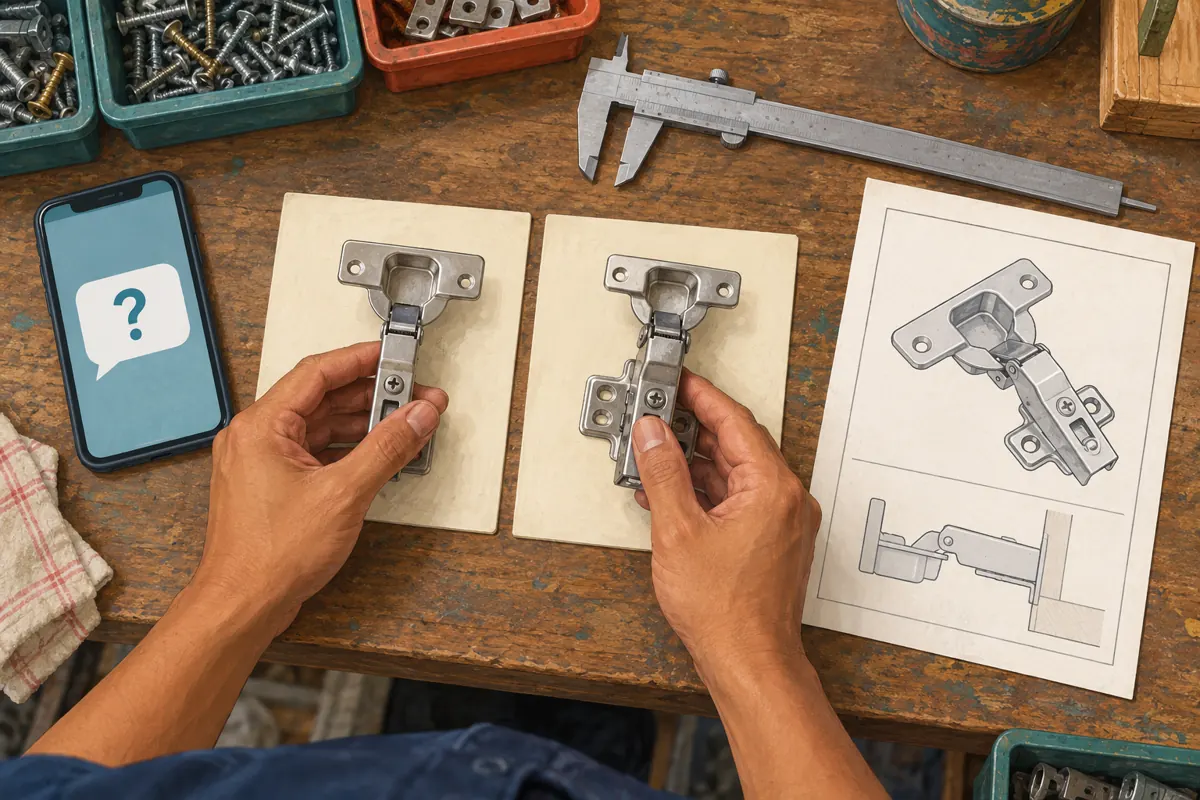
Consider this hypothetical comment: 'Can this replace my old kitchen hinge?' A useful reply explains that the photograph alone is insufficient and asks for the model marking or a close view of the fitting, without household details. If the needed photograph would expose a home interior or personal information, invite the customer to send it privately. Do not ask them to dismantle equipment merely to keep the conversation moving. When identification remains uncertain, recommend bringing the sample for inspection rather than issuing a confident guess.
6. Answer with the fact, its boundary and the next step
A reliable reply has three parts: what staff checked, what that establishes and what still needs checking. For example, in this hypothetical case: 'The pictured package includes the mounting plate. We have not confirmed whether it matches your existing hinge. Please send the model marking through our listed shop contact, or bring the old sample for comparison.' This answers the available question without implying universal compatibility.
Keep public replies understandable to the next reader. Refer to the specific variant instead of saying only 'yes' or 'that one'. When another customer offers advice, distinguish their experience from a shop-confirmed specification. Thank them where appropriate, but verify the claim before adopting it. If staff discover an earlier answer was wrong, post a visible correction explaining the changed fact and update the product information. Quietly replacing a sentence can leave someone who read the original answer with an unsafe assumption.
7. Moderate for usefulness, including uncomfortable questions
Write a short discussion rule covering relevant questions, respectful replies, unsolicited advertising and personal information. Apply it consistently. A critical comment about an unclear product photograph may deserve a better photograph, not deletion. A message impersonating the shop or soliciting payment elsewhere requires prompt attention. Staff should distinguish disagreement from disruption rather than hiding anything that makes the product look less attractive.
Set review times that fit actual staffing and explain when technical questions may take longer. If someone posts personal details, use the available moderation controls to remove the exposure and direct the conversation privately; do not repeat those details in your explanation. Be careful when cleaning the group: Telegram documents that deleting the automatically forwarded channel message there disables comments for that particular post. Check what you are selecting before removing a message that anchors a useful discussion. Source: https://core.telegram.org/api/discussion

8. Assess SMM member offers against the actual task
The supplied smm-cam.com catalogue includes 'Telegram Members ~ 3 Days Non Drop ~ Max 1M ~ 100k/Days ~ Instant ~ 𝗥𝗘𝗙𝗜𝗟𝗟 3D'. Its title identifies a member service and contains delivery and refill wording. The supplied description is empty, so those words do not establish detailed eligibility, destination requirements or refill conditions. Confirm the current written terms rather than treating the title as a complete specification.
For this workflow, the important question is whether a purchase helps customers obtain verified product answers. Purchased members cannot demonstrate genuine interest, sales, Cambodian users or advertising delivery. A member service does not establish that people will read the hinge post or contribute informed questions. Do not infer that the listed offer includes comments or moderation.
The channel and discussion group are also different destinations. Never substitute one link for the other because both relate to the same shop. If the service’s accepted destination or purpose is unclear, do not submit it. Choosing no purchase is sensible when the immediate constraint is missing specifications, unclear photographs or insufficient response capacity.
9. Promote the useful conversation and review its quality
Once the rehearsal works, introduce the channel through places where customers have chosen to hear from the business: the shop’s own social profile, counter materials or a requested follow-up message. Explain the concrete benefit—questions about the pictured fittings can receive a checked answer. Do not advertise the channel as a community of satisfied local buyers merely because it has members. Telegram’s FAQ also cautions against sending unsolicited channel links to strangers. Source: https://telegram.org/faq_channels
Review a small set of actual conversations after the initial operating period. Note the question type, whether staff could answer, what evidence they consulted and whether a clarification remains outstanding. Separate questions answered from orders independently confirmed through the shop’s normal process. If panel activity occurs, record it separately so a change in audience counts is not presented as proof that the discussion workflow generated demand. A recurring unanswered compatibility question is a reason to improve information, even when visible engagement looks encouraging.
10. Fix the causes of recurring confusion
Several mistakes are easy to recognise. Posting multiple similar variants under one vague reference makes replies ambiguous. Giving a blanket 'fits all cabinets' answer turns uncertainty into a promise. Asking for payment evidence in comments exposes information unnecessarily. Buying members to make an empty discussion appear established does not solve any of those problems. Each needs a specific operational fix rather than another promotion.
At the end of the hypothetical shop’s trial, staff might discover that customers cannot distinguish two mounting styles. The practical response is a clearer comparison photograph and an explanation reviewed by someone who knows the products. If discussion remains manageable, continue with the improved post format. If questions accumulate without answers, reduce promotional activity and restore response capacity first. Keep the decision tied to the shop’s ability to help a reader choose correctly, including when the honest answer is that an in-person comparison is necessary.
Frequently asked questions
Should a hardware shop enable comments if most customers ask privately?
Only when public answers would help other readers and staff can maintain them. Start with a product category that generates reusable questions. Keep the private route available for individual circumstances. If nearly every question requires personal order information, improving that private process may provide more value than opening discussion.
Can we use our existing staff group as the linked discussion group?
A dedicated customer group is the better choice. Internal groups often contain material never intended for shoppers. Telegram’s linking requirements include making old group messages accessible, so review history before connecting anything. Creating a suitable group also makes its purpose and moderation rules easier for staff to explain.
Does a customer comment confirm a reservation?
No. Treat a question or expression of interest as an enquiry unless the shop has explicitly completed its reservation process. Confirm the exact item, quantity and relevant collection arrangements privately. State this distinction in the product post when confusion is likely, rather than assuming everyone understands the shop’s process.
What if another customer gives an incorrect compatibility answer?
Reply with the checked information and explain its limits without attacking the commenter. If verification is still pending, say so and discourage reliance on the unconfirmed answer. Add a shop clarification that future readers can understand. Remove content when it breaches the discussion rules, rather than deleting every mistaken but good-faith contribution.
Would buying Telegram members make this workflow successful?
Member delivery cannot establish useful discussion or customer demand. Success here means that questions receive accurate answers and unresolved cases reach an appropriate next step. The supplied member listing does not document Cambodian audience origin or informed participation. Spend attention first on product evidence, response capacity and a clear customer path.
Explore the current service catalogue, create an account, or ask a specific question through support tickets.
- Telegram Channels FAQ
- Telegram: Search Filters, Anonymous Admins, Channel Comments and More
- Telegram Technical Documentation: Discussion Groups
Prepared with AI assistance. Illustrations explain the workflow and do not represent customer results.