22/10/2026 03:47
Preview or Printable Pattern? Telegram File Checks for Cambodian Paper-Box Shops

A photograph can make a gift box look appealing without giving a customer a usable pattern. For a Cambodian paper-box shop promoting samples through Telegram, that difference matters: someone may print the preview, cut the wrong outline, and conclude that the design does not fit. A useful promotional post should explain what the attachment contains and how to check it before using materials. This workflow follows a hypothetical Phnom Penh packaging workshop sharing a small sample template with local sellers. It connects the public post, downloadable document, physical test and enquiry process, while keeping SMM panel activity separate from evidence of customer demand.
1. Decide what the customer should receive
Start with the promise behind the post. Is the shop offering a photograph for inspiration, a printable sample pattern, or a quotation for finished packaging? These are different products. A photograph helps someone compare appearance; a pattern helps them make a trial shape; a quotation requires specifications and commercial confirmation. Choose one main action so that readers know what to do next.
In this hypothetical example, the workshop offers a free paper mock-up for checking whether a small gift will fit. The file is not production artwork, and the sample does not establish strength, food suitability or finished material quality. Say this beside the download. If the shop only intends to sell finished boxes, a dimension drawing may serve customers better than releasing a cutting pattern. Publish a template only when the business owns it or has permission to distribute it.
2. Give the preview and document different jobs
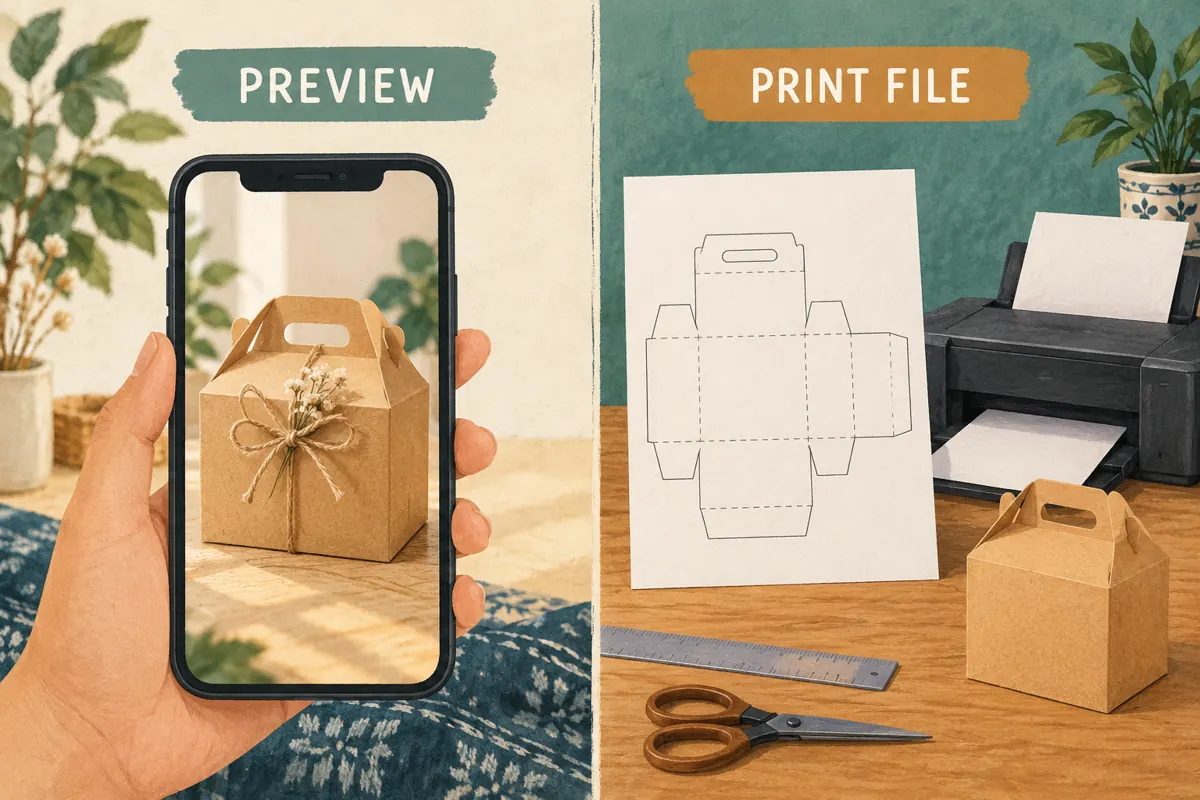
Telegram’s official FAQ confirms that users can send documents and other file types as well as photos. Use that distinction deliberately: show a finished sample in the promotional image, and attach the approved PDF as the printable resource. A screenshot of a pattern is a weak substitute because it may omit page boundaries, instructions or the intended physical scale. A file extension alone also does not establish that the contents are ready to print.
Make the distinction visible in the wording. A hypothetical caption could say: “The photo shows the folded sample. Download the attached PDF for the trial pattern. Do not print the preview image.” Put essential instructions inside the PDF too. Someone may receive the document separately from the original post, and a print-shop worker should not need the entire conversation to understand the task. The article’s illustrations are conceptual examples, not usable cutting patterns.
3. Build a document that identifies itself
Give the file a readable name containing the model, paper format and revision, such as GiftBox-Sample-A4-v03.pdf. This is an illustrative naming convention, not a required Telegram format. Avoid names such as final-new-final.pdf, which force staff to infer the correct version. Repeat the model and revision on the document itself so that a loose printed sheet can still be identified.
Include the intended paper size, units, finished sample dimensions and a small legend explaining cutting and folding lines. State whether dimensions describe the usable interior or the outside of the assembled box. Explain whether the pattern is complete on one sheet or requires assembly across pages. Keep Khmer instructions readable for the intended customers, with an English model reference if useful for staff. Ask a fluent reviewer to check technical meaning rather than relying on an attractive layout.
4. Check print scale before cutting
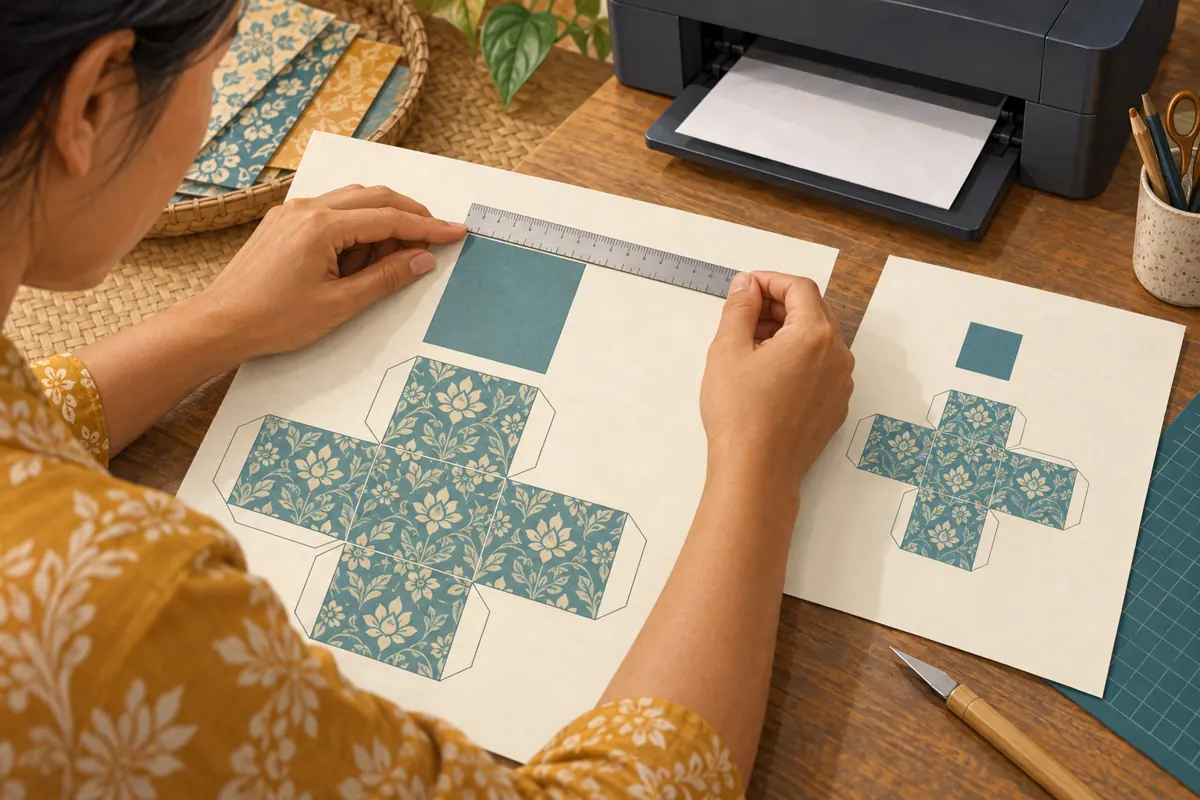
A correctly delivered PDF can still produce a wrongly sized print. Printer settings, page-size choices and automatic fitting can change the output. Add a reference square with clearly stated dimensions to the approved template. For example, a hypothetical test file could include a square marked 50 mm on each side. That measurement is a test instruction, not a claim about a particular shop’s product.
Ask the recipient to select the intended paper size, use actual-size or equivalent printing where available, and measure both sides of the printed reference square. Interface wording differs between print applications. If the square is wrong, stop and check settings before cutting. Do not enlarge the document by eye until the box looks plausible. Also inspect the outer edges for clipping: correct scale does not guarantee that every printer can print everything near the page margins.
5. Test the customer’s complete route
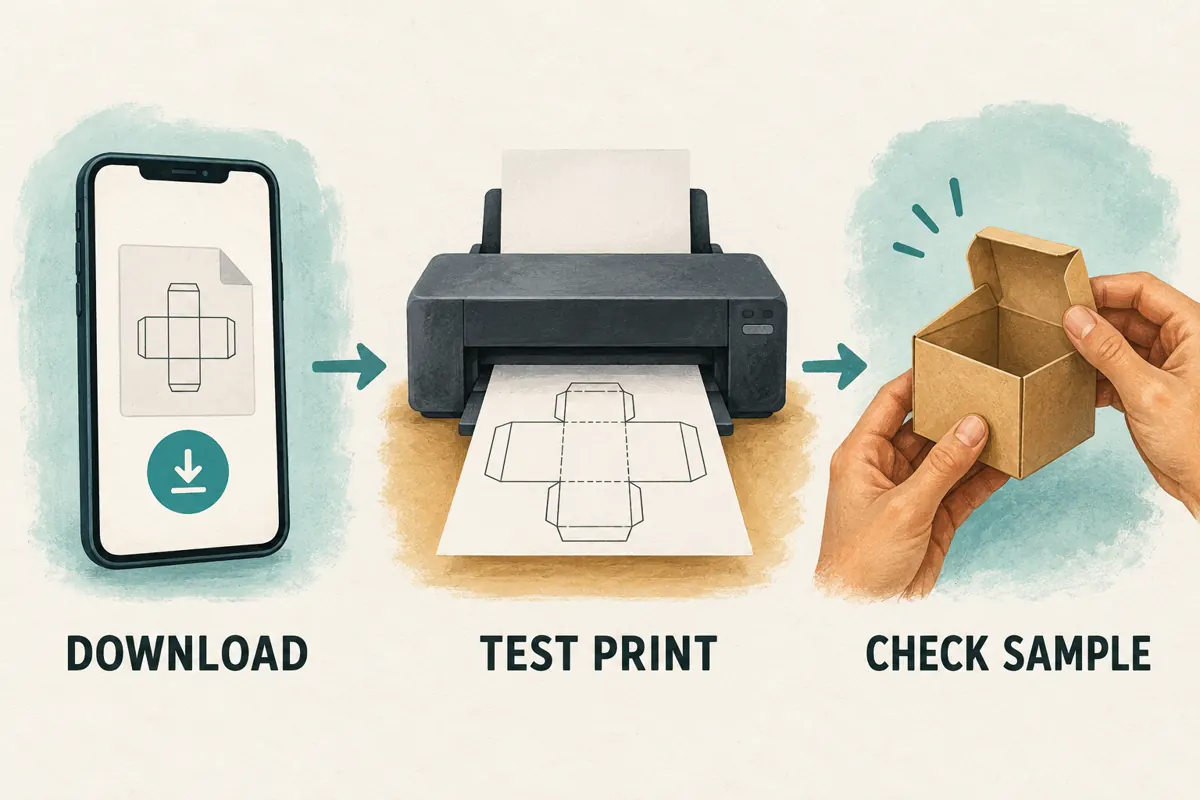
Before promoting the resource, send the approved document to a colleague through the same Telegram route customers will use. Have that person download the attachment, open it, identify the revision and produce a test print. Test the received file, rather than only opening the designer’s local copy. This catches wrong attachments and missing instructions that a visual review of the post may overlook.
Fold a sample after checking scale. Confirm that tabs, fold lines and closure instructions make sense to someone who did not design the box. Use inexpensive paper for an initial shape check, then use the intended material when evaluating practical fit. Paper thickness and folding behaviour can affect the result. If customers commonly take files to a nearby print shop, include that handoff in the test: the operator should be able to follow the document without guessing.
6. Write a post that leads to a useful enquiry
Lead with the customer’s question: will this box shape suit the item they want to pack? Then state what the download provides, identify the matching file and explain the next action. Avoid beginning with a broad claim such as “perfect packaging for every business.” A narrow promise is easier to demonstrate and easier for staff to support.
For the hypothetical workshop, the next action might be: “After checking the sample, send the model reference, your item’s dimensions and the quantity you need.” Ask whether the item needs an insert or extra clearance, rather than assuming a close fit is suitable. Keep prices, materials and collection arrangements in a separate confirmed quotation when they vary. A downloaded pattern is not an order, and a message saying “looks good” does not settle the production specification. Staff should confirm those details explicitly.
7. Plan for documents that travel beyond the post
Telegram’s official Shared Files guide describes a Files overview for documents shared in a chat and the ability to share received documents into other apps. This is useful for customers handing a file to a printer, but it also means the document needs enough context to stand alone. Include a business contact route, model reference, revision and a short statement of permitted use.
Assume that someone may keep an older downloaded copy. When revising a template, assign a new revision and explain what changed, such as a corrected fold line or a clarified interior dimension. Identify which version readers should use. If a customer reports a problem, ask for the revision printed on their sheet before diagnosing the design. Updating a public explanation cannot ensure that every previously downloaded or separately shared copy has been replaced.
8. Review an SMM service without confusing its purpose
One public catalogue example in the brief is “Telegram Post Share ~ Max 100k ~ 100k/day ~ Instant ~ 𝐍𝐎 𝗥𝗘𝗙𝗜𝗟𝗟”. Its title identifies a post-share offer, but the supplied description is empty. The title’s quantity, speed and refill wording should not be treated as independently verified delivery conditions. No supplied detail establishes who would receive a share, where recipients would be located or whether anyone would open the PDF.
Before considering such a service, obtain its current requirements and terms and review applicable platform rules. Do not assume that a document attachment is an eligible target or that a catalogue listing establishes platform approval. Purchased engagement is not evidence of genuine interest, Cambodian users, sales or ad delivery. If the business needs verified local enquiries, direct customer outreach with permission or a clearly managed advertising campaign may be more relevant than purchasing a visible engagement count.
9. Measure whether the resource helped
Choose observations connected to the workflow: customers who mention the model reference, reports of incorrect scale, requests for a different size and quotations that reach specification confirmation. Record these only when they actually occur. A message saying “I printed version three and the square is too small” is useful diagnostic information even though it is not a successful sale. It tells staff where the process failed.
Keep any panel order record in a separate column or log from customer enquiries. A delivery status cannot establish that a person downloaded, printed or understood the pattern. Likewise, a post counter does not reveal whether the sample worked. When asking how someone found the shop, allow “not sure” as an answer. Compare recurring questions over time, then revise the instructions that cause confusion; avoid assigning business results to a promotional action without supporting evidence.
10. Fix the common failure before expanding promotion
The most costly mistake is promoting a resource that has never completed a physical test. Other common failures include attaching the wrong revision, showing a finished box made from a different pattern, omitting units and placing all printing instructions in the caption. A beautiful preview can conceal these problems until customers begin using the file. Review the photograph, document and folded sample together.
Use a simple decision rule. If the preview and file disagree, correct them before further promotion. If the file is accurate but recipients struggle to print it, improve the instructions or offer a prepared sample where practical. If people print successfully but ask about unsuitable uses, narrow the promise. Expand promotion only after the resource answers its intended question clearly. That gives the shop something useful to share and gives customers a reasonable basis for their next enquiry.
Frequently asked questions
Is a clear photograph of the template enough?
It may be enough to discuss the shape, but it is a poor basis for a promise that customers can print accurately. Camera perspective, cropping and print settings can affect the result. Provide a checked document with page dimensions and a reference square when the intended action is printing a trial pattern.
Does sending a PDF through Telegram guarantee the correct size?
No. Receiving the intended file and printing it at the intended scale are separate steps. Check the document’s page format, select suitable print settings and measure the reference square on paper. If the square is incorrect, resolve that before assessing the folded box.
What if the customer does not have a printer?
Make the document understandable to a print-shop operator, or offer a physical sample if the business can support that service. Confirm any sample cost and collection arrangement separately. Do not tell customers that enlarging the template on a phone screen provides an accurate substitute for a measured print.
Should an old template be used after a revision?
Check what changed. A wording clarification may have different consequences from a corrected cutting line. Identify the old and new revisions, explain the difference, and ask affected customers to use the appropriate replacement. Do not assume that changing the public post updates files already saved elsewhere.
Can purchased post shares show that the template is popular locally?
No. Purchased shares do not establish Cambodian readership, genuine preference or successful printing. Treat them only according to verified service terms and keep their records separate. Local enquiries, specific feedback about the sample and confirmed commercial discussions provide more useful evidence, though each still needs honest interpretation.
Explore the current service catalogue, create an account, or ask a specific question through support tickets.
Prepared with AI assistance. Illustrations explain the workflow and do not represent customer results.