20/10/2026 12:25
Strap Detail or Whole Shoe? YouTube Thumbnail Testing for Cambodian Shoe Shops
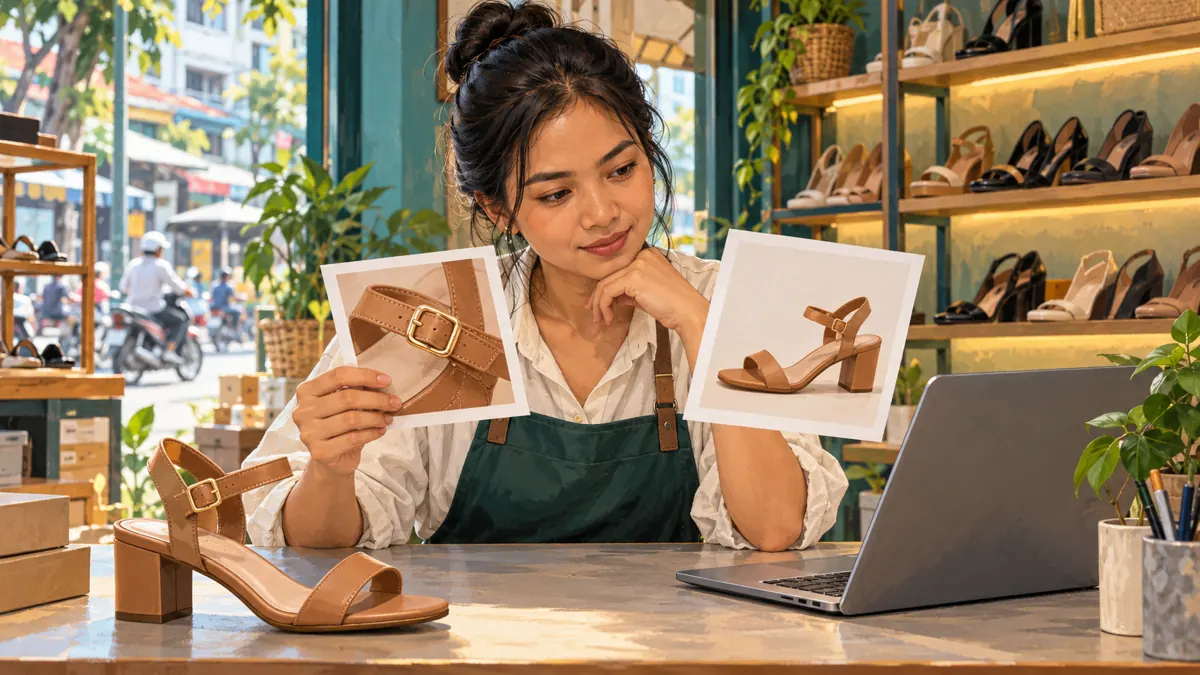
A sandal demonstration can answer a useful question while its thumbnail leaves shoppers unsure what they will see. Should the image show the whole shoe, the adjustable strap or someone fastening it? For a Cambodian shoe shop, that is a practical promotion decision worth examining before spending more on distribution. This workflow explains how to prepare a focused YouTube thumbnail comparison, assess what the result actually supports and connect the lesson to better product communication. It also gives SMM panel customers a clear reason to reject engagement purchases as a shortcut to reliable testing. The shop scenarios below are hypothetical, not customer case studies.
1. Start with a question the video actually answers
Imagine a hypothetical Phnom Penh shoe shop with a demonstration of a tan sandal. The video shows its overall shape, opens the ankle strap and demonstrates fastening the buckle. Staff disagree about the cover image: one prefers the attractive side profile, while another thinks the fastening detail explains the video's usefulness. Write the decision as a question: which image best introduces this particular demonstration?
Keep that question narrower than which thumbnail sells more shoes. A purchase also depends on size availability, fit, price, delivery and the customer's preferences. Your immediate task is to make the video's promise understandable. Watch the finished video before designing candidates. If the buckle appears only briefly and is never demonstrated clearly, a dramatic buckle close-up may create an expectation the footage cannot satisfy. Improve the demonstration first, or choose a different visual question.
2. Choose a video whose information can stay useful
For a first comparison, choose a demonstration with accurate product details and no urgent correction pending. A guide to fastening an adjustable sandal is easier to work with than a sale announcement whose offer ends tomorrow. Confirm that the shoe pictured is the model shown throughout the video. Similar colours can disguise different fastening systems, heel shapes or materials, especially when a shop stocks several related designs.
Check the customer journey as well. A Cambodian viewer who wants to ask about the sandal should find a clear product reference and a contact route that staff actually monitor. Keep pickup and delivery information current, including any limits on the areas served. These preparations do not establish that a thumbnail will perform well. They prevent a successful introduction from leading to avoidable confusion when someone takes the next step.
3. Build three distinct visual ideas
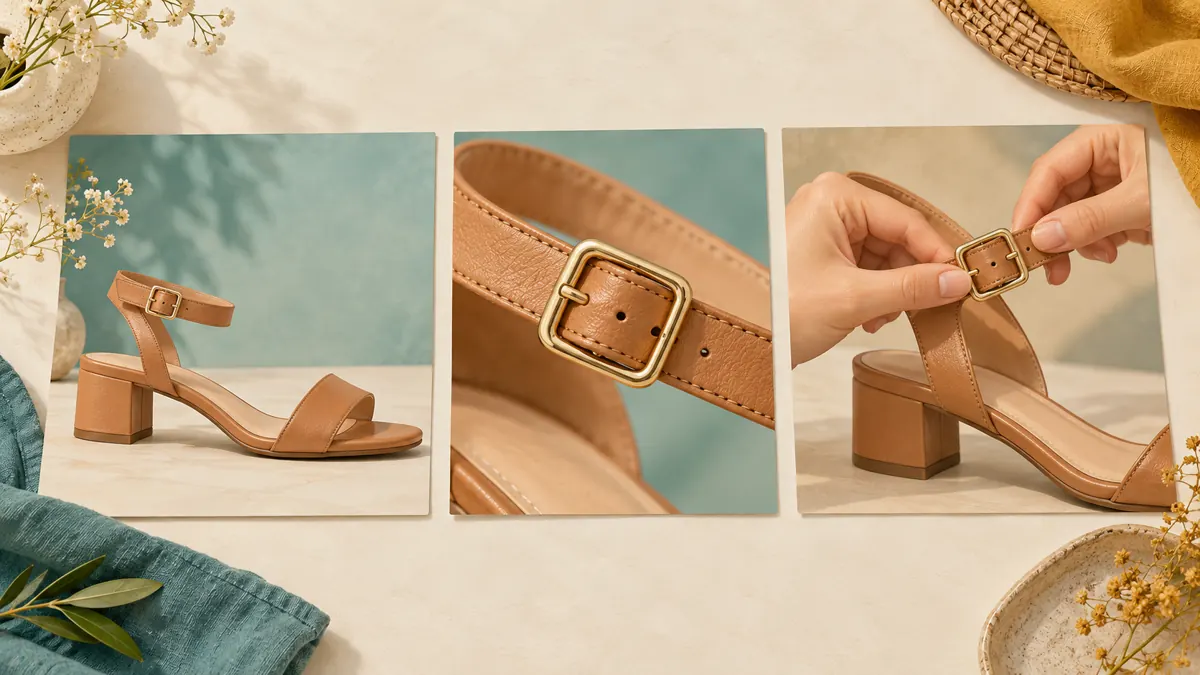
Prepare a whole-shoe image, a fastening close-up and a demonstration image showing hands using the strap. These represent three different ways of explaining the same content: product recognition, component detail and practical action. Use the same actual sandal in each photograph. Keep lighting and colour treatment reasonably consistent so that a warmer edit does not make one candidate appear to show a different material.
Give each candidate a short internal label, such as whole shoe, buckle detail or fastening action. Explain its intended message in one sentence. Avoid producing three nearly identical crops simply to fill available spaces. If only two ideas communicate meaningfully different information, work with those. For this comparison, retain the same title and avoid introducing unrelated claims such as exceptional comfort or waterproof performance. The creative question concerns what the viewer can see, not an unsupported product benefit.
4. Check comprehension before opening the test
Show each candidate at a small size on a phone. Ask a colleague who did not design it what they expect the video to explain. Record their answer before describing your intention. If the fastening image looks like a repair tutorial, but the video only demonstrates normal use, adjust the composition. If the close-up is impossible to recognise without the whole shoe beside it, widen the crop.
For a Khmer-speaking customer base, any thumbnail wording should use language the intended viewers understand. Have a fluent reader review it at its actual display size. A short phrase may help, but fitting every specification into the image usually weakens its main purpose. Keep personal details, customer order slips and supplier paperwork outside the frame. This review is a comprehension check with colleagues, not a representative survey of Cambodian shoppers or a prediction of the test outcome.
5. Use the thumbnail-only option in YouTube Studio
YouTube's official A/B testing guide describes a desktop Studio feature requiring advanced-feature access. Eligible videos can use up to three candidates; Shorts and certain other content types are excluded. Open the selected video's details, choose A/B Testing under Thumbnail, select Thumbnail only, upload the candidates and click Done. Check the linked official guide for the complete eligibility rules.
YouTube compares variants concurrently and evaluates watch time rather than clicks alone. Tests can take up to two weeks. Changing the title or thumbnail during a test stops it and requires a restart. Results are available through the video's details or Analytics Reach tab. Before starting, save your candidate files and a short note explaining the comparison so another staff member understands why those images were selected.
6. Give the comparison a manageable working routine
Assign one person to manage the test and another to flag factual problems. Keep a simple record containing the video reference, candidate labels, starting date and intended question. Add a note when the shop makes a significant promotion change, such as sharing the demonstration with an existing customer group. This context helps later interpretation without turning ordinary shop work into a complicated research project.
Avoid repeatedly redesigning candidates because someone dislikes an early impression of the results. Agree in advance that factual accuracy takes priority: if the image shows the wrong shoe or an unavailable offer, correct the problem and document the interruption. Otherwise, give the planned comparison room to finish. Do not ask staff to repeatedly watch the video, organise engagement exchanges or recruit people merely to influence the outcome. Those activities undermine the customer-focused question you wanted to investigate.
7. Keep SMM catalogue offers outside the experiment
An SMM panel catalogue can contain offers that sound relevant to video performance. One exact listing supplied for smm-cam.com is “Youtube Watch Time ~ Video 60 Min+ Length [ Q 1k=1000 hrs ] ~ 500-1k/days ~ Instant ~ 𝗥𝗘𝗙𝗜𝗟𝗟 30D”. Its title presents it as a watch-time offer, but the supplied description is empty. The wording does not verify delivery methods, audience location, genuine interest or suitability for this workflow.
YouTube's fake engagement policy prohibits artificial increases in views, likes and other metrics, and says a hired promoter's actions can affect the channel. Do not use purchased watch time to influence the comparison or try to produce a clearer result. Purchased engagement is not evidence of sales, Cambodian viewers or official advertising delivery. For a panel customer, the sensible decision here is to decline metric inflation and direct effort toward accurate photography, a useful demonstration and responsive enquiry handling.
8. Interpret the result at the right level
YouTube may report Winner, Performed Same or Inconclusive. Its guide explains that a clear winner is not guaranteed and that insufficient impressions can leave uncertainty. Record the actual result instead of turning a small apparent difference into a confident claim.
In a hypothetical outcome where the fastening image wins, the practical lesson is limited: that presentation worked better under this video's test conditions. It does not establish that all Cambodian shoppers prefer close-ups or that every shoe video should show hands. Keep the chosen image, preserve the alternatives and write a modest next hypothesis. For example, another fastening tutorial might benefit from showing the action clearly. A fashion overview may still need a whole-shoe view because it answers a different question.
9. Review enquiries separately from thumbnail performance
Create a separate note for genuine customer questions arriving during the review period. Useful categories include fastening, sizing, colour availability, pickup and delivery. Record only what the conversation supports. A person asking whether a strap opens fully has expressed a product question; they have not necessarily decided to buy. A confirmed order belongs in the shop's normal sales records, with its actual fulfilment status.
Suppose, hypothetically, that staff receive clearer fastening questions after publishing the demonstration. That may suggest the content is helping conversations, but it does not identify which thumbnail each person saw. Ask where they found the video when that information is useful, without pressuring them to supply a particular answer. Keep unknown attribution unknown. The thumbnail report, enquiry notes and sales records can inform the same business discussion while remaining different kinds of evidence.
10. Turn the lesson into a repeatable creative decision
Finish with a brief decision note: the visual question, the candidates, the reported result, any interruptions and the image retained. Add one sentence about what remains uncertain. This prevents a future staff member from treating an old design choice as a permanent rule. Preserve the original photographs so later edits do not depend on a compressed copy downloaded from a chat.
Common mistakes include choosing a beautiful image that suggests the wrong lesson, showing a different product variant, changing several creative elements without a clear question and declaring success from enquiries that cannot be attributed to a candidate. Another mistake is testing continuously when the real problem is missing information. If shoppers still cannot see how the buckle works, reshoot that step. A better thumbnail can introduce a useful explanation; it cannot supply an explanation the video never provides.
Frequently asked questions
Should a small Cambodian shoe shop test every video?
No. Prioritise videos where the thumbnail presents a real communication choice and the underlying information remains useful. For a routine stock update, a clear, accurate image may be enough. Testing consumes photography and review time, so choose a question whose answer could improve later demonstrations.
What if the shop only has one good product photograph?
Use it if it explains the video honestly. Do not manufacture weak alternatives to create a comparison. During the next product shoot, capture the whole shoe, the relevant component and the demonstrated action. Those photographs can support customer replies as well as future thumbnail work.
Can we use the illustrations in this article as product thumbnails?
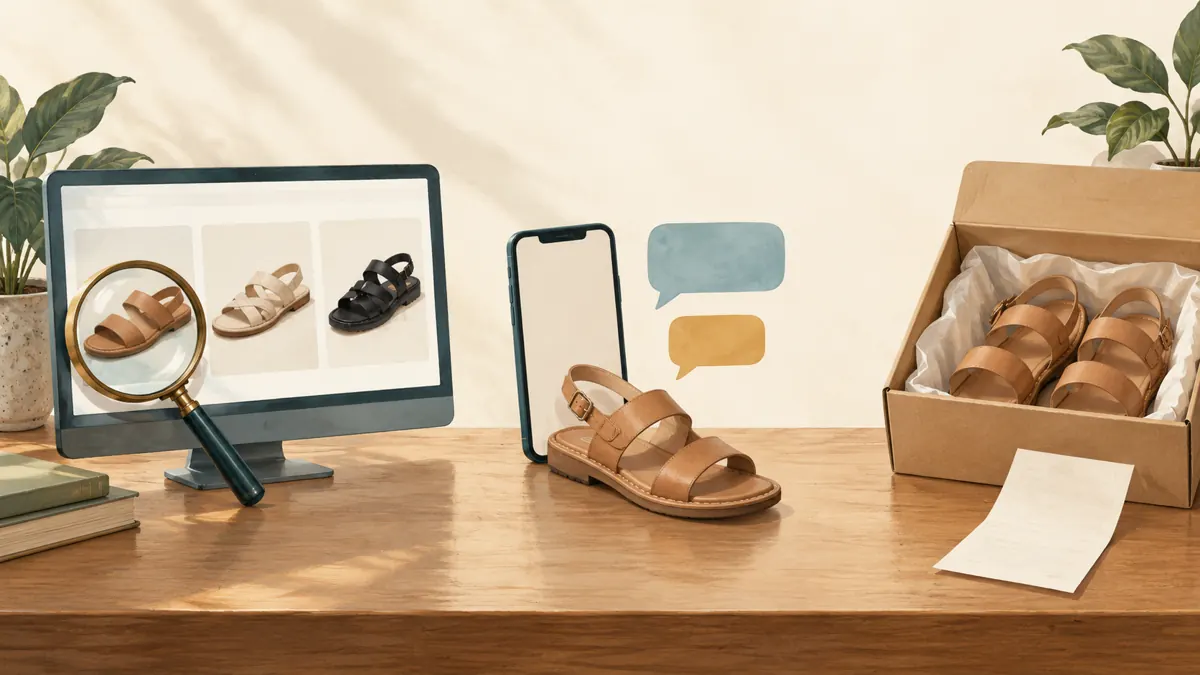
These illustrations explain an editorial workflow and do not document your stock. Photograph the actual shoe for a product-specific thumbnail. An illustrated sandal may have different construction, proportions or fastening details, which could create incorrect expectations even when its general appearance seems close.
Does a winning thumbnail prove that promotion generated sales?
No. A thumbnail result concerns the tested presentation. Establish sales through actual order records, and be precise about how customers found you when that information is available. Do not assign every order during the test period to YouTube or to a particular candidate without supporting evidence.
What should we do when the test does not settle the choice?
Select the image that most clearly and accurately introduces the demonstration, then document the uncertainty. Review whether the alternatives represented meaningful ideas. If they did, there may be no practical reason to spend more time deciding between them. Move on to the next unresolved customer question.
Explore the current service catalogue, create an account, or ask a specific question through support tickets.
Prepared with AI assistance. Illustrations explain the workflow and do not represent customer results.