22/10/2026 11:54
Blurred Mesh or Unfinished Upload? YouTube Quality Checks for Cambodian Screen Shops
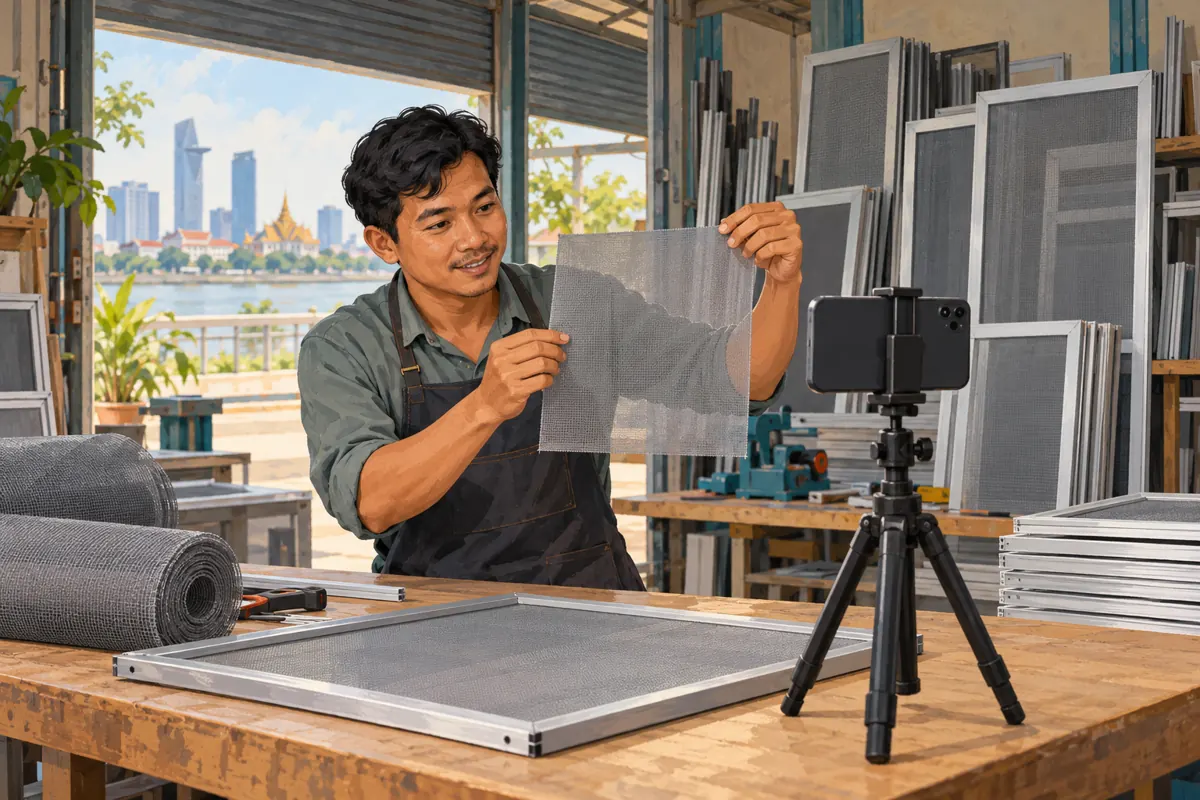
A mosquito-screen demonstration can look clear on the shop’s recording phone yet become difficult to understand when someone watches the uploaded video. Fine mesh disappears, the retaining strip blends into the frame, or the corner fitting becomes a dark shape. For a Cambodian shop promoting made-to-measure screens, this can leave potential buyers unsure what they are looking at. Before sharing the video widely or considering an SMM service, establish whether the problem comes from the recording, upload processing or playback conditions. This workflow uses a hypothetical Phnom Penh screen workshop to show how to diagnose the problem and prepare a demonstration that answers a useful buying question.
1. Decide which detail the buyer actually needs
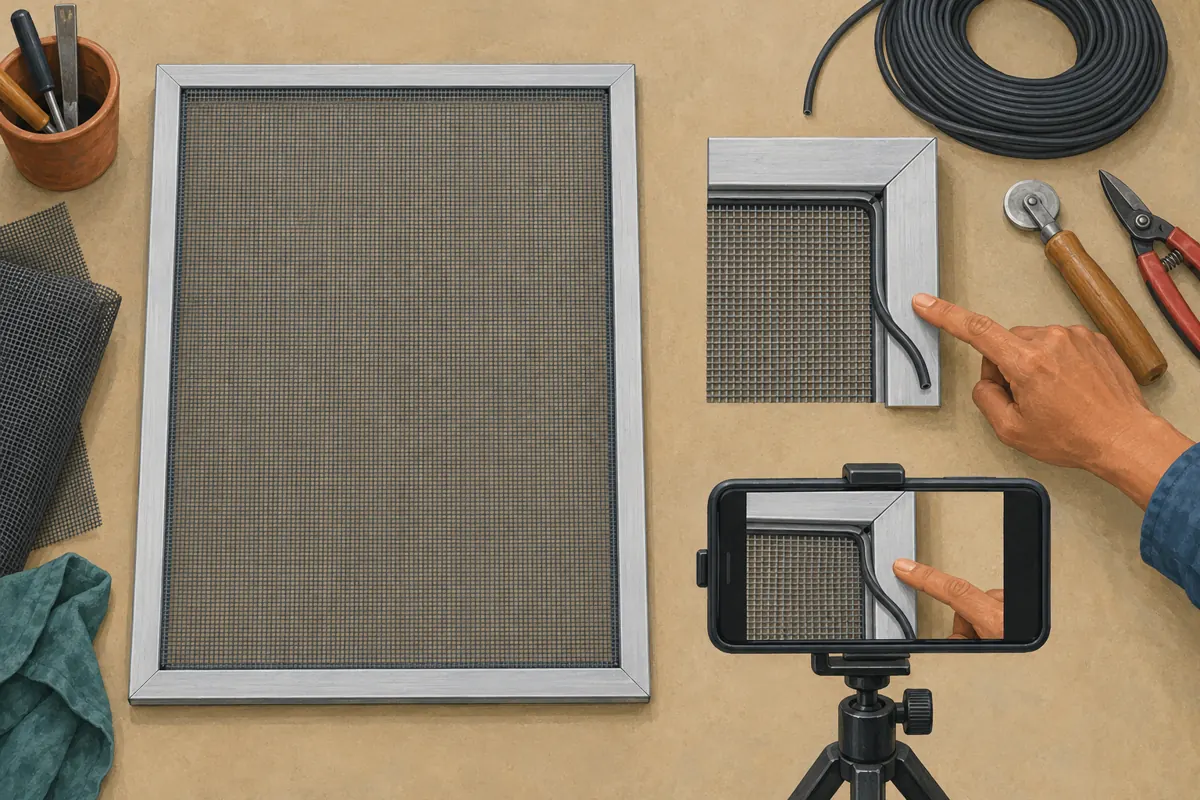
Start with a question that the demonstration can answer visually. For the hypothetical workshop, that question is: “How is the mesh held inside this removable frame?” The viewer needs to recognize the frame, see the retaining groove and follow the strip being seated. They do not need to count every opening in the mesh. Defining this distinction prevents the team from judging the whole video by whether its smallest texture looks perfectly sharp.
Write a short acceptance note before filming: the complete frame must be recognizable, the relevant corner must fill enough of the picture, and the narration must identify the part being handled. Separate those requirements from claims the video cannot establish. A close-up alone does not prove insect exclusion, material durability or suitability for every window. Use confirmed product specifications and an appropriate inspection process for those questions.
2. Diagnose the recording before blaming the upload
Keep the original recording and the finished export available for comparison. Play the exact moment where the mesh or groove becomes unclear. If that detail is already missing in the original, waiting for YouTube will not restore it. Check whether the camera focused on the background, a hand covered the fitting, or reflections hid the edge. If the recording looks clear but the export does not, review the editing and export stage before uploading again.
In the hypothetical workshop, the first recording shows the complete screen against a busy shelf. The mesh blends into the objects behind it. The practical correction is to film the corner against a plain, contrasting background and hold it steady. This gives the buyer a clearer explanation without implying that a larger video file automatically solves poor framing. Keep a brief note identifying which version contains the corrected shot.
3. Separate upload completion from higher-quality availability
YouTube’s official upload guidance explains that a video is initially processed at low quality. Higher resolutions can become available later, and processing time varies with factors including the video’s format, length, frame rate and quality. An upload that can already be watched may therefore still be missing its higher-quality versions. Do not interpret the first playable version as the final quality check.
Open the uploaded video’s watch page, select the player’s Settings and inspect Quality. Compare the available options with the version you intended to upload. If the expected higher-quality option is missing immediately after upload, allow processing time and recheck. Give one colleague responsibility for that check instead of repeatedly uploading copies. Record the video link and the observation, such as “higher-quality option not yet available,” rather than an unsupported diagnosis that the platform damaged the file.
4. Check what the viewer is actually playing
Available quality and selected playback quality are different observations. YouTube says it adapts stream quality to viewing conditions, including connection speed and screen or player size. Its help page also describes manual quality selection. During review, inspect the setting instead of assuming that two phones are displaying the same version. A sharp picture on the editor’s device does not establish what another viewer sees.
Run a simple comparison on the same critical moment: first watch with the normal automatic setting, then select an available higher-quality option. Note whether the groove becomes clearer and whether playback remains comfortable. If the picture improves only under the second condition, the shop still needs an explanation that survives ordinary viewing. This is a check of those devices and conditions, not evidence about internet access across Cambodia or the experience of every customer.
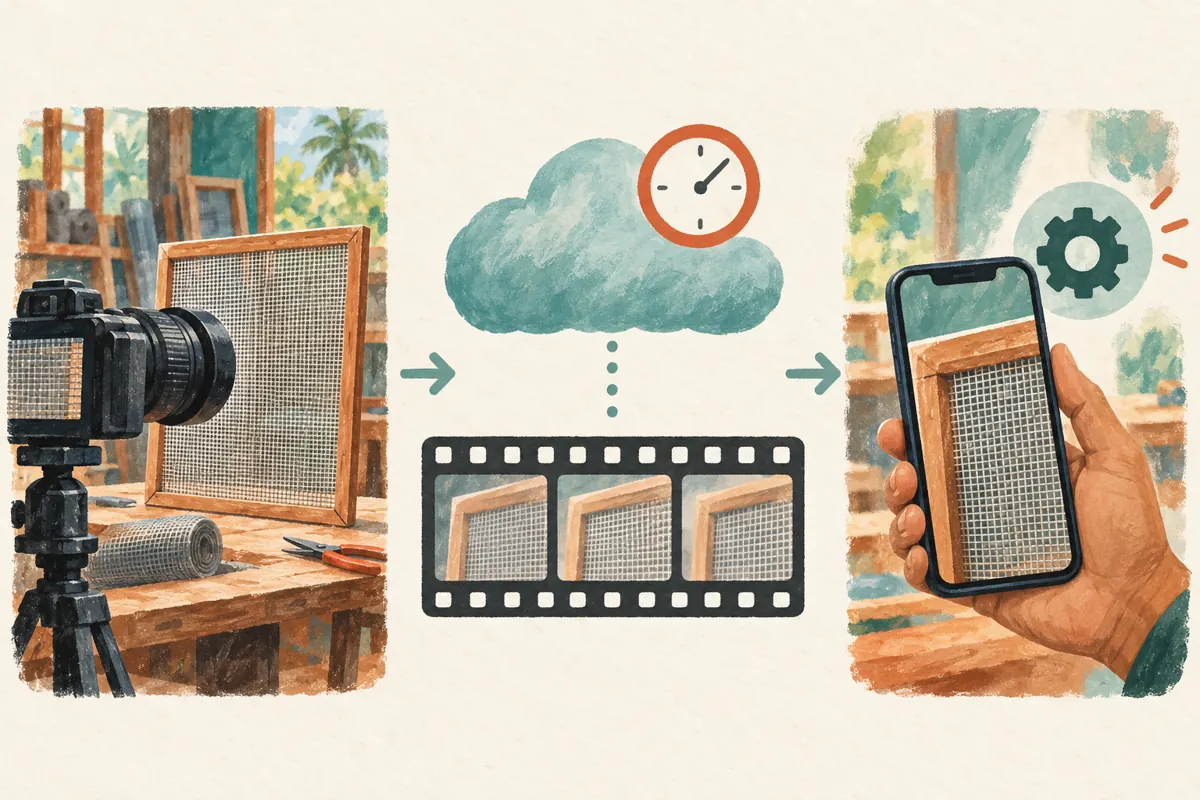
5. Build a demonstration that survives softer playback
Use a sequence that moves from context to detail. Show the complete frame first, then the corner, then the retaining strip being handled. Keep the important part large enough to recognize without zooming the player. Avoid moving the sample while introducing its name. A stationary close-up gives viewers time to connect the spoken explanation with the visible object.
For a Khmer-speaking customer audience, prepare accurate Khmer narration and readable captions where appropriate, even when the shop’s internal review notes are in English. Say which edge or part matters instead of relying on a tiny label. Add a clear still photograph to the customer information you share when a detail needs closer inspection. Present it as a supporting view of the actual sample; do not sharpen or redraw the mesh in a way that suggests a different product.
6. Test understanding with a colleague who did not edit
Ask a colleague to watch on their normal phone without explaining the answer first. Then ask them to identify the retaining strip, describe what the demonstration showed and state what they would send the shop to request a fit assessment. These are useful review questions because they test the intended message. Asking only whether the video “looks good” invites a general opinion that may miss the confusing step.
In this hypothetical example, the reviewer recognizes the frame but thinks the loose strip is a separate accessory included with every order. The shop corrects the narration to explain that the sample is opened for demonstration and that supplied components depend on the confirmed order. That correction matters even if the picture is technically sharp. Record the misunderstanding in the reviewer’s own words, then repeat only the affected part of the check after editing.
7. Make a clear release decision
Use the evidence to choose the next action. If the original recording lacks the detail, refilm it. If the original is clear but the export is not, correct the export. If the expected higher-quality version is still unavailable after a fresh upload, wait and investigate processing before expanding promotion. If the picture is clear but the reviewer misunderstands the product, revise the explanation. These are different problems and should have different fixes.
Approve the video when the key action is understandable under the conditions you tested and the commercial statements match what the shop can supply. Keep the release note small: approved video link, sample identity, reviewer, test date and any remaining limitation. A shop can honestly say that a video illustrates one frame construction while requiring photographs and measurements before confirming compatibility. Avoid turning a demonstration into an implied promise that every existing window will accept the same fitting.
8. Review SMM catalogue claims separately from clarity
The supplied smm-cam.com catalogue includes the exact title “YouTube Like ~ Max 5k ~ 5k/days ~ Instant ~ 𝗥𝗘𝗙𝗜𝗟𝗟 30D”. Its accompanying description is empty. The title identifies a likes-related offer, but its wording does not independently establish delivery, genuine interest, audience location or platform approval. A catalogue label cannot demonstrate that Cambodian buyers understood the screen fitting.
YouTube’s fake engagement policy prohibits artificially increasing metrics such as views, likes and comments. It also states that actions by someone hired to promote a channel can affect that channel. Review the proposed method against that policy before spending, and decline methods that artificially inflate engagement. Purchased engagement is not evidence of sales, ad delivery or Cambodian users. For this workshop, the immediate promotion task is to distribute an understandable, accurate demonstration through suitable legitimate channels; a panel metric cannot repair an unclear shot.
9. Share the video with a specific next step
Once approved, introduce the video with the buying question it answers. In the hypothetical workshop’s customer message, the explanation might say that the clip shows how mesh is retained in one removable frame design. Invite the interested viewer to send a photograph of their existing frame and ask for the shop’s measurement instructions. Avoid requesting a guessed dimension before explaining exactly which edges should be measured.
Keep location and service scope concrete. State the shop’s actual collection point or confirmed service area when relevant; do not imply nationwide installation because the video can be watched nationwide. Use the same approved clip when responding to that particular fitting question so staff do not circulate an older, less clear version. If a customer asks something the demonstration does not answer, address it directly rather than treating another video view as progress toward a confirmed order.
10. Learn from enquiries without inventing results
After sharing, review the substance of genuine enquiries. Do customers identify the frame type more clearly? Do they send the requested photograph? Are they still confusing the retaining strip with a separate product? Keep these observations as practical feedback, with enough context to understand the question. Do not convert a small set of conversations into a claimed improvement percentage or a testimonial without appropriate evidence and permission.
Common mistakes include comparing different scenes on different devices, deleting a fresh upload before checking processing, assuming maximum resolution means correct focus, and using likes as a substitute for comprehension. Another is blaming viewers for not choosing a better quality setting. Make the useful action easier to see and explain. When a problem repeats, revise the specific shot or instruction responsible, then check that revision before investing more effort in distribution.

Frequently asked questions
Should we upload another copy as soon as the first version looks blurry?
First compare the source file and inspect the uploaded video’s available quality options. A fresh upload may still be processing higher resolutions. Re-uploading immediately creates another item to track without establishing the cause. If the source or export is unclear, correct that file before deciding whether another upload is necessary.
Does every mosquito-screen demonstration need 4K?
Choose a recording approach that makes the relevant part understandable. A higher resolution cannot compensate for a hidden groove, incorrect focus or an unexplained action. Test the actual exported demonstration on a phone. If buyers need exact mesh specifications, provide verified specifications rather than expecting them to determine those from video texture.
Can we ask a customer to select a higher playback quality?
Yes, as a troubleshooting suggestion when the detail appears unclear and a higher-quality option is available. Also offer another useful way to inspect the part, such as a clear photograph or an in-person sample. The customer should not need to solve a playback problem before learning what information the shop requires.
Would a YouTube likes service show that the clearer video worked?
No. A purchased metric does not establish comprehension, authentic demand or local audience origin. It also requires scrutiny under YouTube’s fake engagement rules. Evaluate this particular improvement through direct review questions and the content of genuine enquiries, while keeping any service records separate from business conclusions.
What should staff record when a customer reports an unclear picture?
Record the video link, approximate moment, device type if volunteered, and the detail the customer could not identify. Ask whether other parts were understandable. You usually do not need account credentials, private screenshots or a long technical report. Use the observation to reproduce the problem and provide the missing explanation.
Explore the current service catalogue, create an account, or ask a specific question through support tickets.
- YouTube Help: Low video quality after upload
- YouTube Help: Change the quality of your video
- YouTube Help: Fake engagement policy
Prepared with AI assistance. Illustrations explain the workflow and do not represent customer results.