20/10/2026 09:14
Will It Cover a Backpack? TikTok Creator Search Insights for Cambodian Rainwear Shops
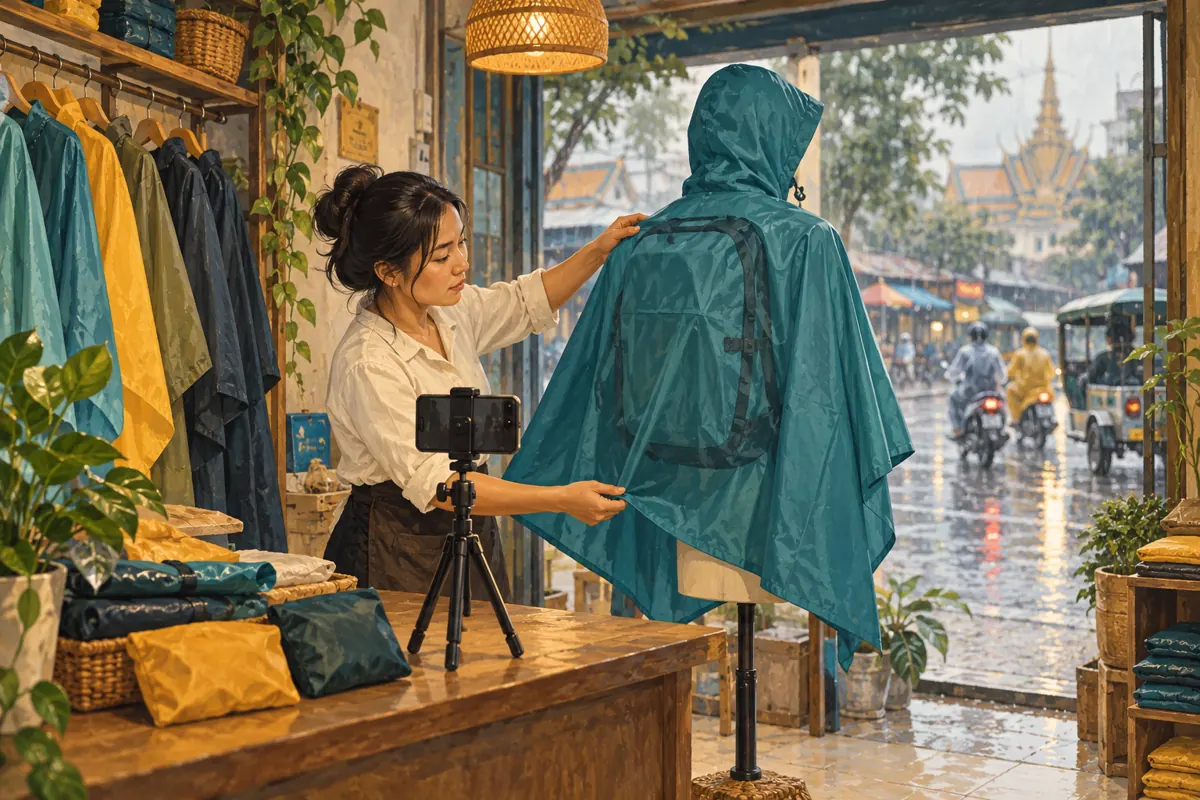
A rainwear shop can publish an attractive poncho video and still leave the buyer’s main question unanswered: will it cover the bag they carry? For Cambodian retailers, a useful promotion often starts with this kind of practical uncertainty. Colour and presentation matter, but customers also need to understand coverage, fastening and storage before choosing a product. TikTok Creator Search Insights can provide topic ideas where the feature is available. The work is deciding which idea your shop can answer honestly. This guide follows a hypothetical Phnom Penh rainwear shop preparing a backpack-coverage demonstration. It explains how to select a topic, film a useful answer and review the response. For businesses considering an SMM panel, it also explains why purchased engagement cannot validate search demand or establish that Cambodian customers want the demonstrated product.
1. Start with a buying uncertainty your stock can resolve
Before opening a research tool, write down the decisions customers face at your counter. For rainwear, these might include whether a bag fits underneath, whether the front fastening is easy to close or whether the garment fits inside its pouch. Choose questions that can be answered with products currently available. A popular topic is of little practical value if your team cannot demonstrate it or fulfil the resulting enquiries.
In our hypothetical shop, staff repeatedly explain the difference between wearing a backpack underneath a poncho and carrying it outside. They select one question: how does this particular poncho sit over a loaded backpack? The intended result is a clearer product decision. The demonstration does not need to prove that the poncho is universally suitable, and it should not imply that visible coverage establishes waterproof performance.
2. Check access and understand what the tool supplies
TikTok describes Creator Search Insights as a source of personalised information about topics people search for. Its official instructions direct users to search for “Creator Search Insights” in the app and tap View. Available tools include topic exploration, a Content gap filter and search-performance information. TikTok says the Searches by followers filter requires more than 1,000 followers. That requirement concerns the filter, rather than establishing that every account can access the feature.
TikTok’s launch announcement described availability in selected regions. Do not assume that every Cambodian account will display the same options. If you cannot access it, continue with questions received at the counter and through genuine customer conversations. Record that those ideas came from customer enquiries. Avoid presenting manual observations as tool-generated findings, or spending money on a service that claims it can unlock an unavailable research feature.
3. Read a content gap as a question to investigate
TikTok describes content-gap topics as subjects people search for that have relatively little content. That makes them possible starting points, not guaranteed commercial opportunities. A topic may concern entertainment, a different product category or circumstances your shop does not serve. Search popularity alone does not establish the searchers’ location, purchasing power or intention to buy from a Cambodian retailer.
For a hypothetical research session, suppose you encounter a broad topic about rain ponchos and bags. Inspect the question behind it before selecting it. Are people looking for packing instructions, coverage comparisons or fashion ideas? Write a short interpretation beside the topic, such as “possible uncertainty about bag coverage.” Keep the original topic wording in a separate field. This preserves the difference between what you observed and what you inferred, particularly when a colleague later reviews the plan.
4. Choose a topic using three practical tests
Apply three tests before filming. First, relevance: does the question match a real situation your customers describe? Second, demonstrability: can the camera show a meaningful answer with the equipment and stock you have? Third, follow-through: can staff explain the product and respond to the next likely question? Reject a topic if meeting it would require unsupported claims, unavailable stock or a demonstration that conceals an important limitation.
In a hypothetical comparison, “best rainwear for every journey” fails because the shop cannot substantiate such a broad conclusion. “Can this poncho cover this loaded backpack?” is narrower and observable. “How small does it fold?” may also be useful, but belongs in another demonstration. Select one question for the first post. A focused answer gives viewers a clear reason to watch and gives your team a more specific subject to evaluate afterward.
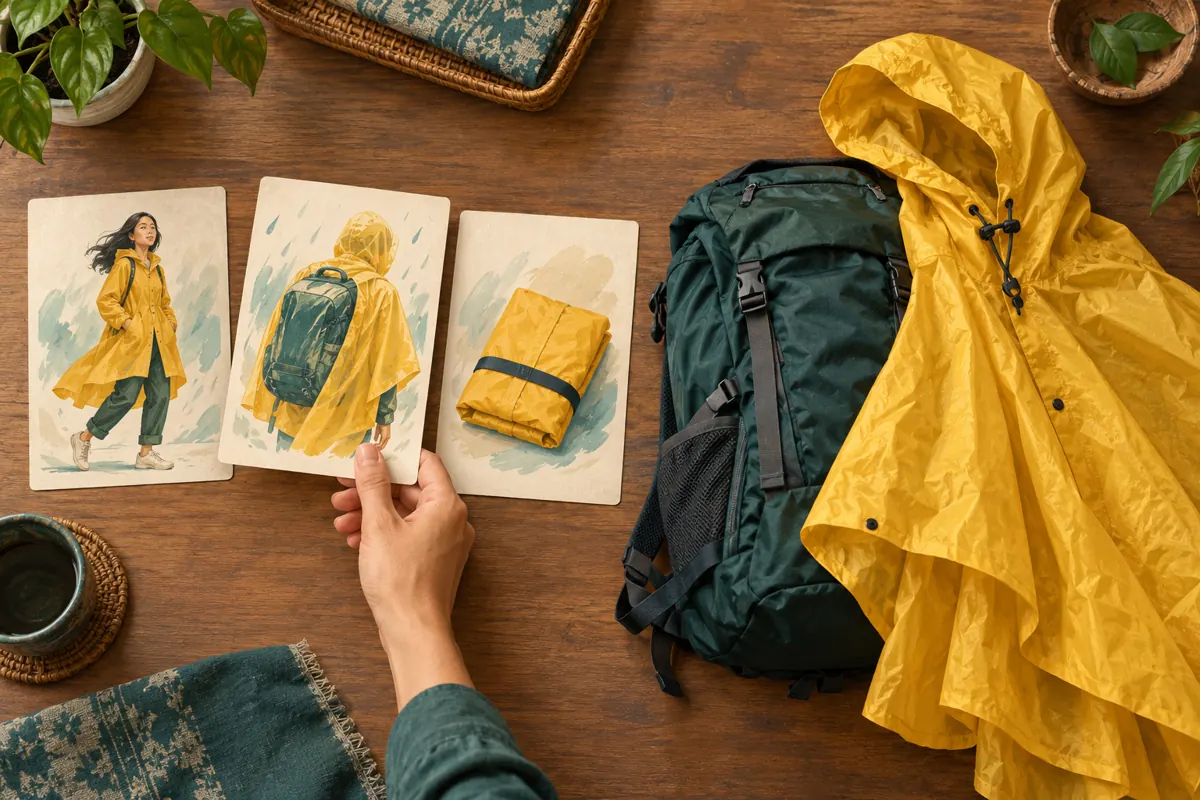
5. Translate the search idea into a local demonstration
Use the language your intended customers understand, even when the research topic appears in English. Ask a Khmer-speaking colleague to express the actual buying question naturally. Translating each word mechanically can obscure whether you mean a backpack underneath the garment or a separate cover for the backpack. Keep the product model and the demonstrated arrangement clear in speech, captions and the enquiry instructions.
Local relevance should come from useful context. Show a bag loaded as a customer might carry it, identify the garment being demonstrated and explain how customers can ask about their own bag dimensions. Do not add unrelated Cambodian place names merely to make the caption appear locally targeted. If delivery or collection is mentioned, use the shop’s confirmed arrangements. A location reference helps only when it tells the viewer something accurate about obtaining the product.
6. Film the answer and preserve the limitations
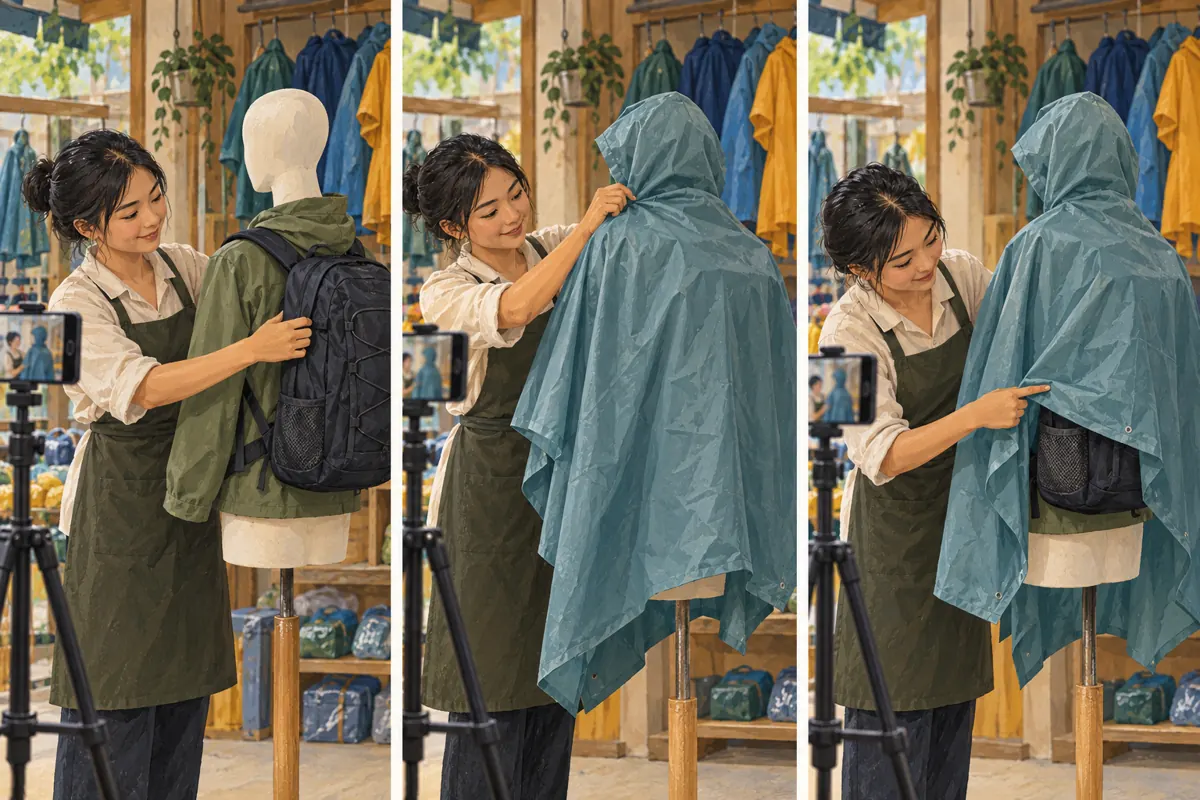
Prepare a simple sequence: show the loaded bag, place the poncho over it, then show the sides and lower edge. Keep the bag contents and garment consistent throughout. A mannequin or consenting staff member can demonstrate coverage without involving a customer. Frame the shot widely enough to reveal exposed corners instead of cropping them out. Use a stable camera position so viewers can compare the uncovered and covered arrangement.
Explain what the demonstration establishes. It shows how one garment fits over one bag in the conditions presented. It does not establish protection during prolonged rain, suitability for every body size or safe use while riding. If you discuss water resistance, rely on verified product information and describe any demonstration conditions accurately. Avoid staging an impressive splash test and letting viewers infer a performance guarantee that the footage cannot support.
7. Publish an answer with a manageable next step
Open the video with the practical question and move quickly to the relevant view. Name the product plainly and explain the observed limitation before closing. A suitable hypothetical invitation would be: “Send your bag’s height, width and depth so we can explain how to compare it with this sample.” Only offer an individual comparison if someone at the shop can actually provide it.
Keep the caption readable. State the demonstrated model, the question answered and any important qualification. Repeating the same search phrase throughout the caption does not make the explanation more useful. TikTok’s Community Guidelines also require its content disclosure setting when promoting a product, brand or business. Check that setting for the shop’s promotional post. Before sharing, have another staff member watch the finished video and explain what they believe it promises; correct any unintended implication.
8. Keep SMM-panel offers outside the demand test
The supplied public catalogue includes “TikTok - Comment ~ Emoji ~ 𝐍𝐎 𝗥𝗘𝗙𝗜𝗟𝗟 ~ 1k-3k/days ~ INSTANT”. Its title identifies an emoji-comment offer, but the accompanying description is empty. That is insufficient evidence to verify audience origin, delivery timing, account characteristics or any contribution to search visibility. The title should not be treated as an independent performance finding.
Emoji comments cannot answer whether a shopper’s backpack fits. Purchased engagement is not evidence of genuine interest, sales, ad delivery or Cambodian users. TikTok’s rules prohibit services that artificially increase engagement or manipulate its recommendation system. For this workflow, do not purchase engagement to make the topic appear validated. If an existing campaign has panel activity, record that fact separately and acknowledge the resulting uncertainty when interpreting aggregate metrics. A service delivery record and a customer’s product question answer different business questions.
9. Review discovery, enquiries and purchases separately
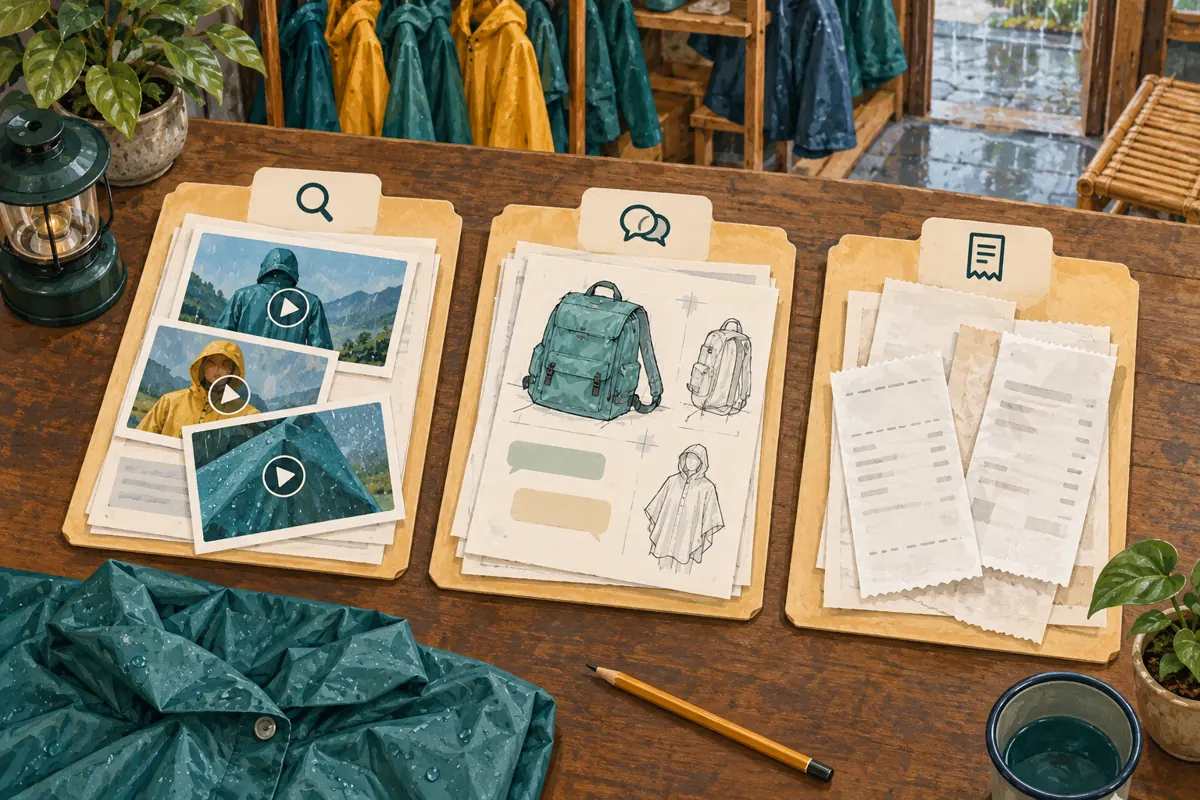
Keep three short records. The discovery record contains the published video reference, review dates and whatever relevant search information the account actually displays. The enquiry record summarises genuine questions without copying unnecessary personal details. The sales record contains confirmed transactions under your normal business process. These records can inform one another, but a search-related view does not automatically become a local enquiry or a purchase.
Choose a review window before interpreting results and use comparable windows for later posts. Note other changes, including stock availability, a price adjustment or separate promotion. In a hypothetical review, several viewers might ask about a larger bag while nobody asks about the fastening. That would support considering a larger-bag demonstration; it would not establish market-wide demand. If the account provides little usable data, say so. Useful editorial decisions can still come from specific, authentic questions.
10. Fix the explanation before expanding the campaign
Common mistakes include selecting an irrelevant trend, copying another creator’s demonstration, hiding the uncovered edge and treating reactions as product research. Another mistake is changing the model, opening question and filming arrangement together, then attributing the response to one change. Preserve enough consistency to understand what you improved. When a customer misunderstands the coverage, review the relevant shot before deciding that the post simply needs more exposure.
Give the video one of three practical outcomes: keep it as a useful answer, revise the unclear explanation or prepare a separate answer to a new question. For example, a hypothetical shop might retain the original bag-coverage video and film a second demonstration about folding the same garment. Keep responsibility clear: someone checks stock accuracy, someone answers enquiries and someone records the review. This makes search research part of everyday customer service rather than an isolated exercise in chasing topics.
Frequently asked questions
Can a Cambodian shop use this workflow without Creator Search Insights?
Yes. Start with recurring counter questions and genuine messages, then apply the same relevance and demonstration tests. Describe the topic as customer-informed rather than claiming it came from TikTok search data. You can still create a useful answer and review the resulting enquiries without access to the research feature.
Does a content-gap topic mean Cambodian customers are searching for our product?
No. The topic is a research lead. It does not by itself establish Cambodian audience origin or demand for your particular model. Check whether the underlying question matches conversations with your customers, then make a limited, useful demonstration. Avoid purchasing stock solely because a suggested topic appears promising.
Should we include the English search phrase in a Khmer video?
Include it only when it helps viewers identify the product or understand the question. Natural Khmer wording may communicate the buying problem more clearly. Genuine model names can remain unchanged. Have a colleague check that the spoken explanation, caption and demonstrated arrangement all describe the same thing.
Can emoji comments show that people want another demonstration?
An emoji does not specify what someone needs explained, and purchased comments cannot establish authentic demand. Look for genuine questions identifying a particular uncertainty, such as bag size or fastening position. If the meaning of a real customer’s response is unclear, ask a neutral follow-up instead of treating it as a buying commitment.
What should we change if the video receives attention but few enquiries?
First check whether the answer, product identity and enquiry route are clear. The video may satisfy an informational need without prompting a purchase. Review actual questions and available discovery information before changing anything. Test one useful revision, such as a clearer side view, and avoid promising that extra exposure will produce sales.
Explore the current service catalogue, create an account, or ask a specific question through support tickets.
- TikTok Help Center: Creator Search Insights — official French-language instructions
- TikTok Newsroom: Get inspired with Creator Search Insights
- TikTok Community Guidelines: Overview, including fake engagement and commercial disclosure
Prepared with AI assistance. Illustrations explain the workflow and do not represent customer results.