19/10/2026 17:36
Can Customers See Your Personal Number? Telegram Privacy for Cambodian Repair Shops

A useful repair demonstration can bring an unexpected question: which personal details will customers see when they contact the person who posted it? For a Cambodian appliance repair shop, the same phone may handle supplier calls, family conversations and customer enquiries. Before promoting a Telegram post, decide how that public attention should reach the business. This workflow covers choosing a contact boundary, checking the customer’s view and removing accidental disclosures from promotional material. It also explains why an SMM panel order cannot establish that your enquiry route works or that the people viewing a post need repairs.
1. Define what the promotion should invite
Start with a concrete customer action. For a repair demonstration, a useful invitation might ask someone to describe an appliance fault and send a photograph of the model label. That is different from inviting unrestricted calls to the technician’s personal mobile. Write down the intended action before selecting the contact details that will appear beneath the video.
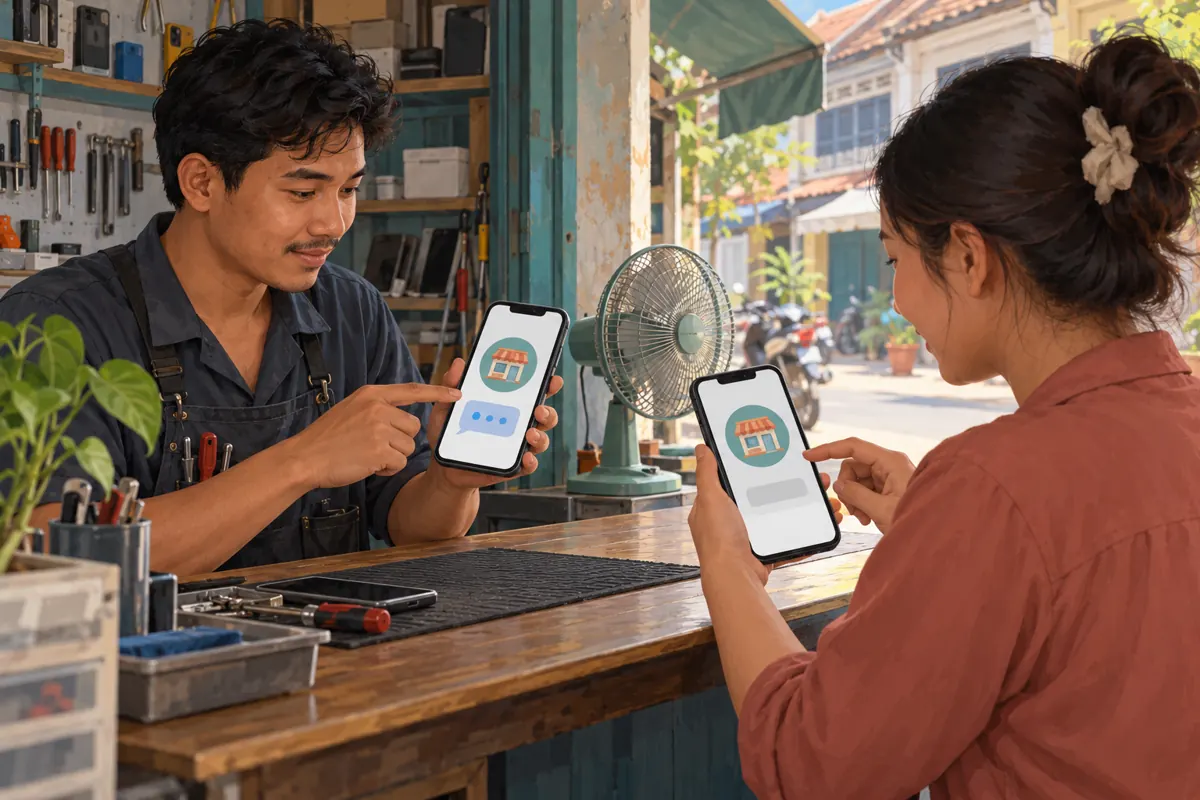
In a hypothetical Phnom Penh repair shop, the owner wants enquiries about desk fans but prefers to keep family calls separate. The promotional post therefore directs customers to a designated Telegram conversation. The first reply asks about the model and symptoms; a telephone conversation is arranged later when necessary. This is a proposed operating process, not a claim about actual customer results.
Choose an outcome you can observe: whether a customer reaches the correct inbox and receives a useful next step. A larger public counter does not answer either question.
2. Choose the boundary before changing settings
Decide whether the number associated with the account is intended to be public business information. An owner may deliberately advertise a dedicated shop number. An employee may reasonably decline to advertise a personal one. Record that decision explicitly so that someone preparing the next poster does not reverse it by copying an old contact line.
Consider continuity as well as convenience. Who will handle enquiries when the technician is busy, absent or no longer working at the shop? If your plan depends on one person’s private account, settle those responsibilities before distributing its contact details widely. A contact route should have an agreed owner and a realistic response routine.
For a hypothetical Battambang workshop, the decision could be to publish the shop’s approved contact route while keeping individual technicians’ numbers out of promotional assets. The practical benefit is a consistent destination that staff can explain at the counter.
3. Review Telegram’s phone-number controls
Telegram says private chats and groups can be used without making your number visible. Its documented default shows the number to people you have added as contacts. Review Settings > Privacy and Security > Phone Number. Telegram also cautions that people who already know and have saved your number will still see it. These details come from the official [Telegram phone-number FAQ](https://telegram.org/faq#q-who-can-see-my-phone-number).
Read the choices and any exceptions displayed in your installed app. Compare them with the boundary you agreed, then save the intended configuration. Treat number visibility and any number-based discovery control as separate questions: what information should appear, and how should a new customer find the account?
Keep a short internal note of the intended outcome and review date. Avoid circulating a full settings screenshot when a sentence will do. The note should help the next responsible person understand the decision without exposing the very number you are trying to keep private.
4. Use a contact route that matches that decision
Telegram’s FAQ explains that a public username lets people find and message you without knowing your number. A username-based t.me link can open that conversation. Replying does not itself reveal the number unless your privacy settings permit it. A public username also makes the account discoverable, so expect contact from unfamiliar people. See [Telegram’s username guidance](https://telegram.org/faq#usernames-and-t-me).
For the shop’s promotional material, copy the approved contact destination from the actual account and check it carefully. Do not type a plausible username from memory. Read the destination as well as the visible link label, particularly when reusing a caption supplied by another staff member.
If the intention is to avoid publishing a personal number, inspect the link itself for that number. Also review adjacent text and graphics. A carefully configured profile cannot undo a phone number printed directly into a promotional image.

5. Test from a genuinely new visitor’s position
Ask a consenting tester who has never saved the shop account’s number to follow the exact route you plan to promote. A familiar colleague’s existing conversation is a poor substitute for this check. Explain the test beforehand and use an ordinary, clearly identified test enquiry rather than pretending to be a genuine buyer.
Have the tester open the link, inspect the profile and send a brief message about a sample appliance. Check whether the expected shop identity appears, whether unintended contact information is visible and whether the message reaches the person responsible for replies. Then send a response and inspect the profile again.
Record observations narrowly: the destination opened, the displayed identity matched, the number was or was not visible, and the reply arrived. Do not turn one successful test into a promise about every device or contact relationship. If something differs from your intention, resolve it before distributing the post more widely.
6. Check the places where numbers escape the settings
Review the whole promotional asset, not just the Telegram profile. Repair counters often contain handwritten intake notes, collection labels, delivery slips and receipts. A video about a noisy fan can accidentally show a customer’s telephone number on the tag tied to its handle. Move paperwork before filming and inspect the final crop before approving it.
Check captions, profile descriptions, contact cards, saved reply text and older graphics selected for reuse. Also examine any QR destination by opening it. An attractive square on a poster tells you nothing about whether the underlying address contains a personal number or leads to the intended conversation.
In a hypothetical Siem Reap shop, the owner discovers that a reusable price graphic contains an employee’s old mobile number. Replacing that graphic is part of preparing the promotion. Changing a Telegram setting alone would leave the published image unchanged.
7. Make the first enquiry useful without collecting everything
Give customers a small, relevant starting request. For example: send the appliance type, describe the problem and attach a clear model-label photograph if available. Explain that an initial message does not confirm the repair cost or a collection appointment. This reduces the chance that someone interprets an acknowledgement as a booking.
For Cambodian customers, prepare wording in the language your staff can reliably handle, including Khmer where appropriate. Ask a fluent colleague to review any translation. Keep model names and identifiers intact, and avoid demanding a long typed explanation when a short description would let the technician ask a better follow-up question.
Request an address or callback number only when the next service step needs it, and explain why. A hypothetical customer asking whether a fan model can be inspected does not yet need to send delivery directions. Keep that information out of public promotional discussions.
8. Decide whether an SMM service addresses the actual problem
The supplied smm-cam.com catalogue includes the exact public service name “Telegram - Post Views - [ LAST 5 POST ]”. Its title identifies a post-view offer referring to the last five posts. The supplied description is empty, so it does not establish the delivery method, audience location, retention or which posts would be selected at a particular moment.
That offer cannot configure phone-number privacy, test an enquiry link or ensure that a technician answers. Purchased engagement is not evidence of genuine interest, Cambodian users, sales or official advertising delivery. Do not describe a panel order as Telegram advertising or imply an official platform affiliation without supporting evidence.
If the problem is a broken contact route, fix the route. If the problem is unclear repair information, revise the demonstration. Before considering any service, review its current terms and relevant platform rules. Declining an order is sensible when its stated activity does not answer the business question.
9. Release the promotion with a clear response routine
Once the contact test passes, approve the exact version of the demonstration, caption and destination together. Give the person handling enquiries the same version. They should know which appliance appears, what the post promises and what information they should request before discussing inspection or collection.
Choose a release time when someone can check the inbox during the shop’s normal working routine. Publish realistic response expectations rather than implying constant availability. For a small workshop, a clear statement about when messages are reviewed can prevent unnecessary follow-ups while the technician is handling repairs.
If you discover an exposed personal number after release, correct material you control and notify the affected person. Identify where the asset was distributed so you can request corrections where practical. Do not promise that removing your own copy removes every copy someone may already have saved.
10. Review enquiry quality and avoid misleading conclusions
After promotion, review practical friction: messages reaching the wrong person, repeated questions about where to send photographs, or customers believing they must telephone first. These observations point to specific revisions. For example, repeated uncertainty about the required photograph suggests improving the invitation or providing a clearly labelled sample.
Keep any panel delivery record separate from the enquiry log. For enquiries, record only what helps the business follow through: the appliance category, the customer’s question and the agreed next step. Do not infer a person’s location from a username or profile image. Ask about the service area when it becomes relevant.
Common mistakes include testing only with existing contacts, publishing a number inside an image, assuming a public username is a privacy guarantee and treating increased views as proof of a functioning sales process. Repeat the contact check after changing the destination, account configuration or person responsible for replies.

Frequently asked questions
Can a shop be reachable on Telegram without printing a personal number?
Yes. A username-based contact route can support that approach, subject to the account’s privacy settings. Review both the configuration and the public materials. The practical test is whether a new visitor can reach the intended conversation while seeing only the information the shop has agreed to disclose.
Why should the tester be someone who has never saved the number?
An existing contact may see a different result from a new visitor. Testing only with a long-standing colleague can therefore give you false confidence or unexplained discrepancies. Record the tester’s starting relationship with the account so that the result has useful context.
Should every repair customer be asked for a callback number immediately?
Base that request on the next step. An initial question about an appliance model may be answerable in the conversation. If a technician needs to arrange a call or collection, explain that purpose and ask for the appropriate details then. Avoid collecting information simply because an old reply template requests it.
Will buying Telegram post views help verify the contact link?
No. A post-view service does not demonstrate that someone opened the contact destination, reached the correct staff member or received a helpful answer. Use an explicit visitor test for that. Assess genuine enquiries through their content and follow-up, without attributing them to purchased activity merely because the timing overlaps.
What if the shop deliberately wants to advertise its business number?
That can be a deliberate operating choice. Confirm that the number belongs in public promotional material, that someone handles incoming calls and that staff know when it is available. The goal is intentional disclosure and reliable service. Keep customer numbers and unrelated personal numbers out of the same material.
Explore the current service catalogue, create an account, or ask a specific question through support tickets.
Prepared with AI assistance. Illustrations explain the workflow and do not represent customer results.