19/10/2026 20:34
Will the Lid Close? TikTok Video Replies for Cambodian Storage-Box Shops
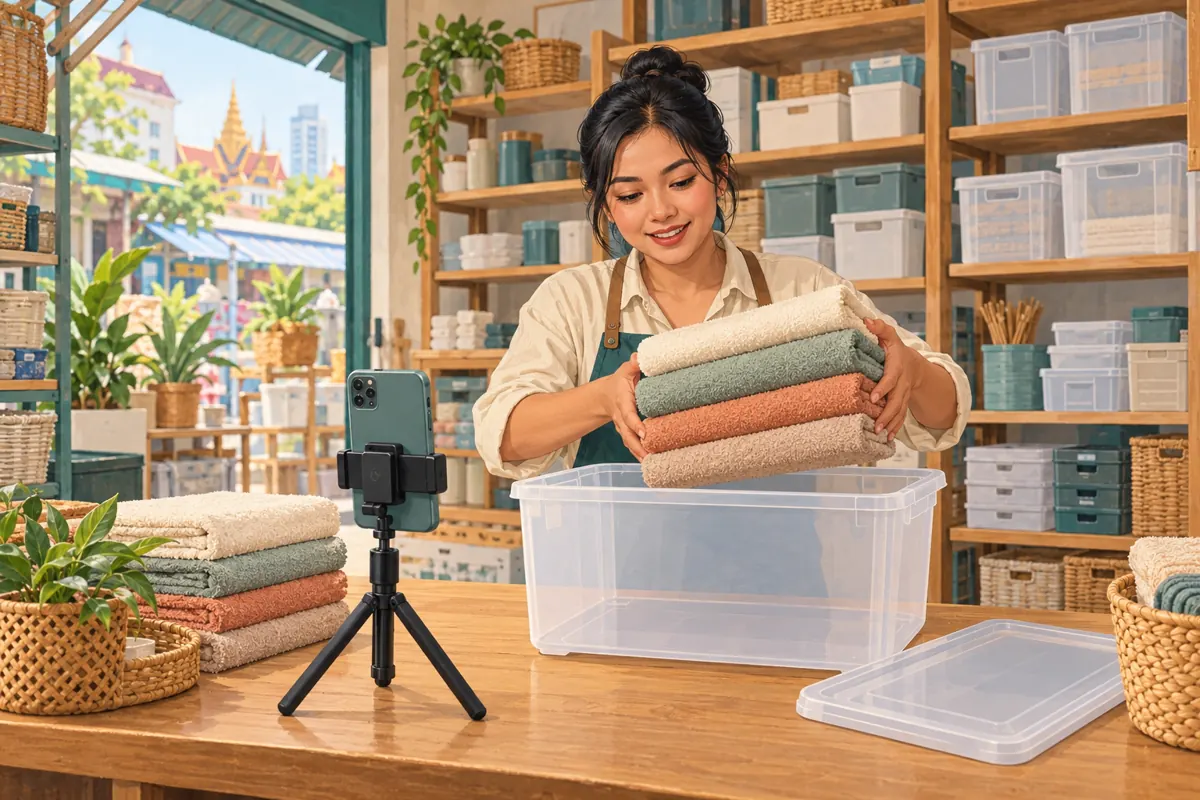
A storage box can look spacious on a phone screen while leaving shoppers unsure whether their towels, bedding or household supplies will fit. Answering every question with “message us” adds another step without resolving that uncertainty. A short demonstration can show the answer directly. For Cambodian household-goods shops, TikTok video replies offer a practical way to connect a genuine question with a visible test. This workflow explains which comments deserve a video, how to film an honest answer, and what to review afterward. It also helps readers evaluating SMM panels distinguish a useful customer conversation from a purchased engagement count.
1. Choose a question that needs visible evidence
Start with the decision the shopper is struggling to make. “Will the lid close over folded bath towels?” is a strong video candidate because the answer depends on shape, thickness and clearance. “Are you open today?” usually needs a direct written answer. A delivery complaint needs individual handling. Sorting comments this way keeps filming focused on problems that a demonstration can actually resolve.
Use three tests before selecting a question: can the answer be shown clearly, will it help other shoppers, and can you demonstrate it with the exact product available? A question about an unknown box from another seller fails the last test. Ask for clarification instead of guessing. For a small shop in Phnom Penh or Battambang, one carefully chosen reply is more manageable than turning every comment into a production task.
2. Understand what a TikTok video reply creates
TikTok’s official tutorial describes selecting a comment on your video, pressing the camera icon beside the comment field, and recording a response. The comment can appear as a sticker. The published response appears in the comment conversation and as a new video on your page. Check the controls available in your current app; the tutorial documents the feature rather than guaranteeing an identical interface on every device. [TikTok video-reply tutorial](https://newsroom.tiktok.com/product-tutorial-reply-to-comments-with-video?lang=en)
Because the response is also a separate video, make it understandable without the original clip. Identify the product, state the question aloud and show the relevant detail. Avoid opening with “Yes, this one does,” while pointing at an unidentified container. Someone encountering the reply independently should understand what was tested. If the video-reply control is unavailable, provide a written answer and make a standalone demonstration when useful.
3. Keep the customer's question in context
Read the full comment and its surrounding conversation before filming. “Does it fit?” might refer to fitting towels inside the box or fitting the box beneath a bed. Those are different demonstrations. Confirm the meaning when necessary. Do not select only a flattering fragment or turn an ordinary question into an endorsement. Asking about a product does not establish that the commenter bought it or recommends the shop.
Review any identifying details before featuring the comment. If it contains an address, phone number or order reference, answer privately through an appropriate contact route and make a general demonstration without displaying those details. Do not stage a customer question through another account. A staff-created question can still be useful content when presented honestly as the shop’s own explanation. Genuine questions are useful prompts, but customer identity is rarely necessary to teach the answer.
4. Prepare a test that matches the claim
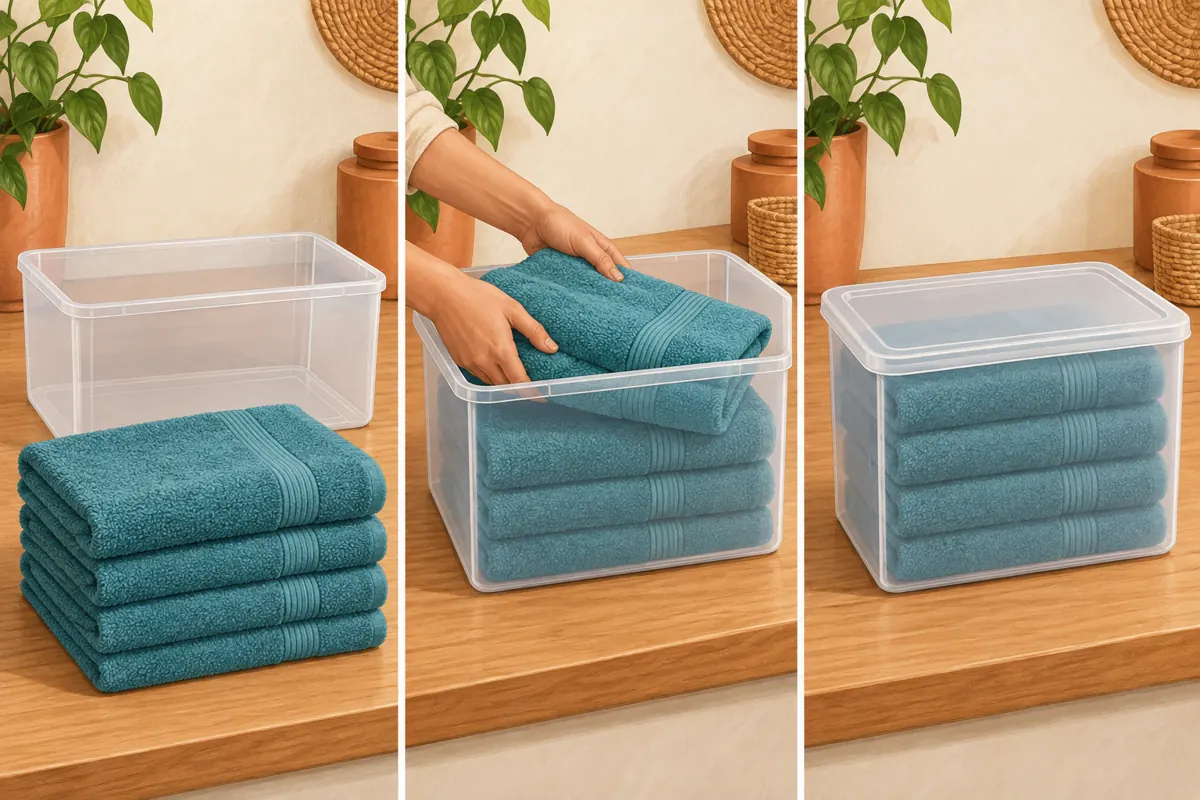
Write a single sentence describing what the demonstration will establish. In a hypothetical Siem Reap shop example, the sentence might be: “These folded towels fit inside this model, and its lid closes without pressure.” Bring the actual box, its matching lid and the towels into the filming area. Check that staff can distinguish this model from similar containers on the shelf. A successful demonstration of one size says nothing definite about another.
Choose an angle that reveals the opening and the space beneath the lid. Show the empty interior before loading it. If dimensions matter, measure the relevant space and distinguish internal storage dimensions from the box’s outside dimensions. Avoid substituting a litre label for a fit check: two containers with similar stated capacity can have different shapes. Describe any limitations, such as thicker towels or a different folding method changing the result.
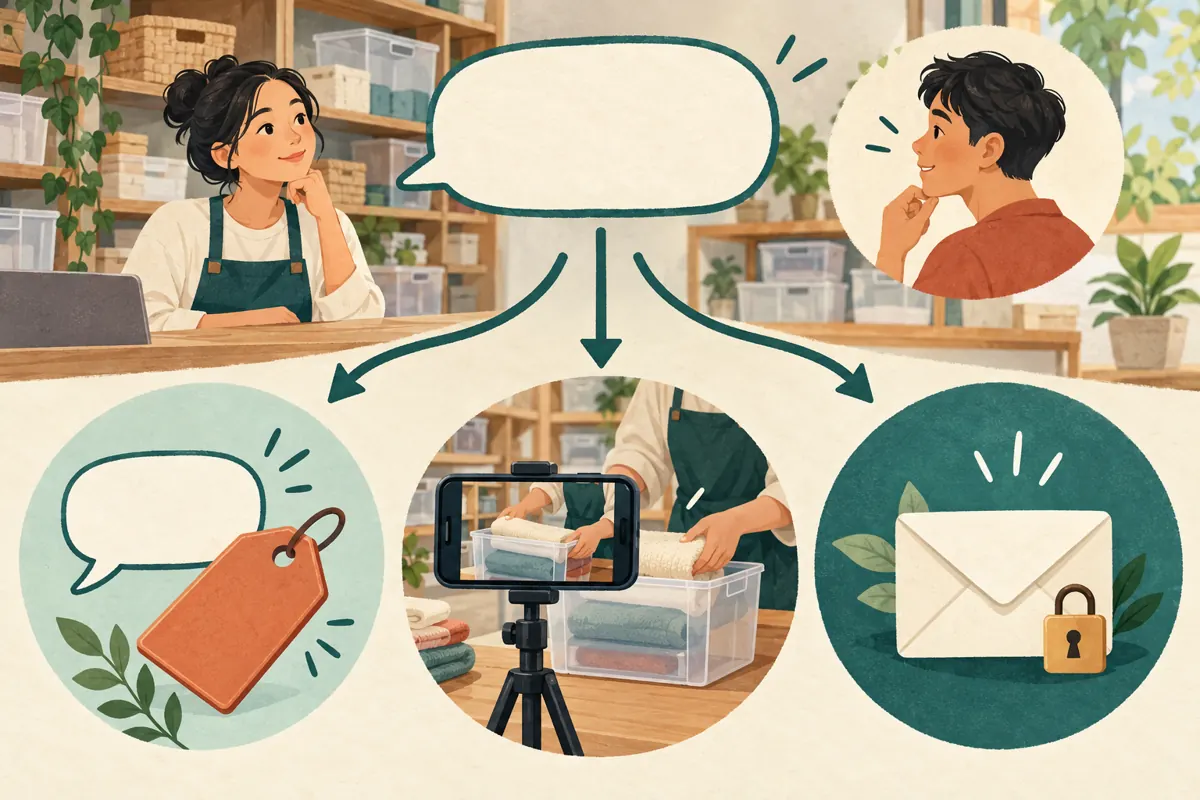
5. Film the answer as a continuous, understandable action
Build the demonstration around the action the shopper needs to see: place the towels inside, lower the lid, and remove your hands so the result is visible. Keep the critical fit test continuous where practical. An edit between loading the box and closing it can hide a change in contents, even unintentionally. If the lid does not close, show that result and explain what needs to change rather than forcing a successful-looking shot.
Speak in the language the intended customers understand, usually Khmer for a Khmer-speaking audience. Keep product codes and measurements clear, and explain unfamiliar terms with ordinary words. Frame the important action away from the planned comment sticker and captions. Watch the draft on a phone with sound muted, then listen without watching. Those checks reveal whether the visual evidence and spoken explanation each carry the essential meaning.
6. Give the reply one useful next step
End with the information needed to continue the enquiry. In the hypothetical towel example, a useful closing is: “If your folded stack is taller, send its measurements so we can check another size.” This is more specific than asking viewers to engage for its own sake. For a shopper asking whether the container fits under a bed, request the available height and opening width instead of immediately recommending the largest model.
Keep availability and ordering separate from the demonstration. A fit test does not reserve stock or confirm delivery to a particular Cambodian town. If price or stock is mentioned, make clear when that information was checked and verify it again before accepting an order. Do not request addresses or payment screenshots in public comments. Give customers the shop’s established contact route, and ensure the person answering there understands which demonstration prompted the enquiry.
7. Review the published reply from a shopper's perspective
After posting, open the reply and check that the intended question is attached, the product is identifiable, and the sticker does not cover the lid or measurements. Play the entire video rather than checking only its opening frame. Then revisit the original conversation to confirm that the response is easy to understand in context. This is a content check, not a reason to assume TikTok will distribute the video widely.
Record the original post link, reply link, product reference and the limitation demonstrated. Keep the note short enough that another staff member will use it. If a later customer asks the same question, staff can find the answer without searching through unrelated clips. When the product changes, reassess the old demonstration before continuing to direct shoppers to it. A familiar-looking replacement container may have a different lid, taper or usable interior.
8. Apply a clear SMM-panel decision rule
The supplied catalogue includes “TikTok - Likes ~ 𝗛𝗤+𝗥𝗘𝗔𝗟 ~ Max 5M ~ 200k/Days ~ Instant ~ 𝗥𝗘𝗙𝗜𝗟𝗟 30D”. Its title identifies a likes offer, but no description accompanies it. The title’s quality, authenticity, speed and refill wording is not independent verification. It provides no basis for claiming Cambodian viewers, useful questions, sales, official affiliation or advertising delivery. A displayed catalogue label cannot establish those outcomes.
TikTok prohibits services that artificially increase engagement and says it removes fake likes, followers and other inflated signals. For this workflow, do not purchase artificial engagement to make a reply appear trusted or popular. [TikTok integrity and authenticity guidelines](https://www.tiktok.com/community-guidelines/en/integrity-authenticity/)
Use the decision point to redirect effort toward the unanswered product question. If the lid is obscured or the model is unclear, improve the demonstration. Purchased engagement cannot supply missing evidence, and a panel completion record cannot prove genuine interest in the product.
9. Review whether the answer reduced uncertainty
Look at the substance of subsequent conversations. Are shoppers now supplying measurements? Are they asking about a different model because the first one clearly will not fit? Are staff still explaining the same hidden detail? Record those observations separately from views and likes. An enquiry can be useful without becoming a sale, and a sale should be recorded only when the shop’s normal order process confirms it.
For a hypothetical weekly review, suppose viewers continue asking whether the lid is included even after the fit question is answered. That suggests a missing product detail worth clarifying; it does not prove that the video failed overall. Add the detail to future explanations and answer the existing questions. Avoid claiming that one reply caused a change in sales when stock, pricing, seasonality or other promotion also changed. Treat small samples as clues for the next practical improvement.
10. Avoid mistakes that make replies harder to trust
The most common mistake is answering a broad question with evidence from a narrow example. Showing that one folded towel stack fits does not establish that every household’s towels will fit. Another mistake is choosing the most popular comment while ignoring the question blocking a purchase decision. Prioritise clear, answerable uncertainty over the comment’s reaction count. Never describe a demonstration as customer proof simply because it began with a customer question.
Also avoid turning each reply into a long catalogue tour. Switching between several boxes makes it harder to remember which one passed the test. Finish the selected answer before introducing alternatives. Assign responsibility for checking follow-up questions so the video does not lead to an unattended conversation. A workable routine is to select one question, prepare the exact product, film the evidence, review the reply and answer the next relevant enquiry.
Frequently asked questions
Should every repeated question receive a new video reply?
No. Reuse the explanation when the product and question are genuinely the same. Make another demonstration when the previous answer misses a material difference, such as lid clearance, internal width or a different model. Repetition alone is a reason to improve access to an answer, not necessarily to film it again.
What if there are no suitable customer comments?
Make a standalone demonstration based on a question staff regularly explain, and identify it as the shop’s own guidance. Do not manufacture a customer conversation. You can invite viewers to ask about dimensions or intended use without promising a reward or suggesting that engagement reserves an item.
Can a video reply confirm that the box will fit a customer's home?
Only to the extent supported by accurate measurements and the specific situation. A demonstration at the shop cannot establish an unseen shelf’s clearance or a doorway’s width. Ask for the relevant measurements, explain tolerances and avoid a definite fit promise when important information is missing.
What should staff do if the reply attracts likes but no enquiries?
Check whether the answer identifies the model and explains how to ask about suitability. Do not assume that reactions indicate local buying intent. Continue reviewing genuine questions and normal order records. Buying more reactions would not resolve uncertainty about who needs the product or why they have not enquired.
Can the article's illustrations serve as evidence that a product fits?
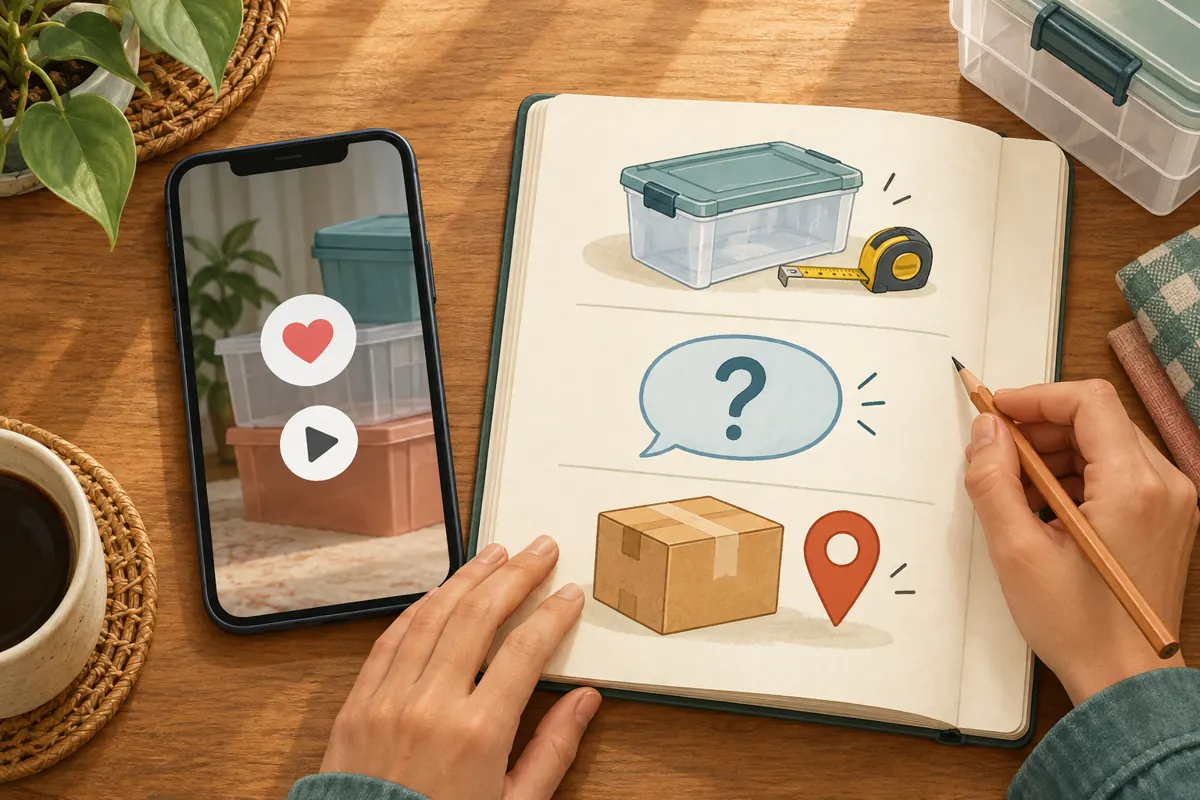
No. These are explanatory illustrations, not product tests or customer records. A shop should film its actual container and contents before making a fit claim. The illustrations explain the workflow; they cannot verify capacity, construction quality, stock availability or any customer's experience.
Explore the current service catalogue, create an account, or ask a specific question through support tickets.
- TikTok — Product tutorial: Reply to comments with video
- TikTok Community Guidelines — Integrity and Authenticity
Prepared with AI assistance. Illustrations explain the workflow and do not represent customer results.