22/10/2026 18:23
Same Part, Different Spoken Size? YouTube Dub Reviews for Cambodian Sewing-Supply Shops
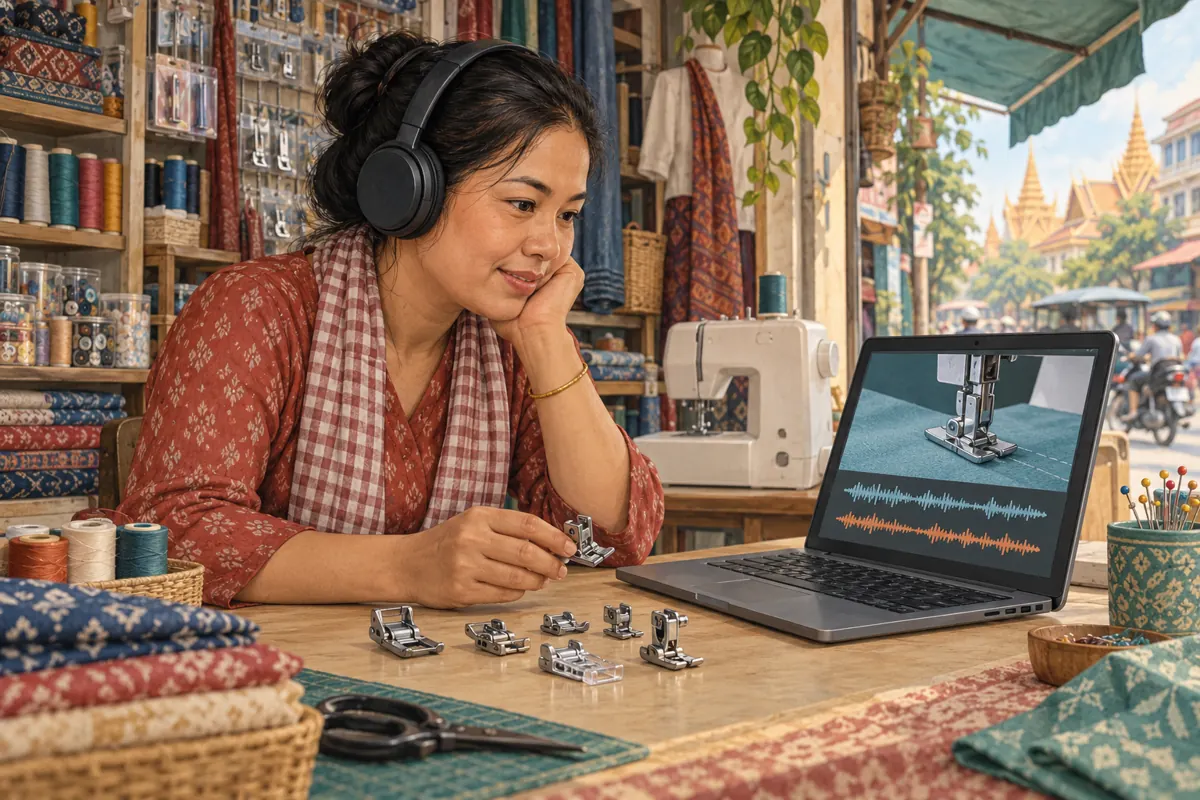
A sewing-machine attachment can look correct on screen while the translated voice describes the wrong size or fitting. For a Cambodian sewing-supply shop, that mismatch can turn a helpful demonstration into an avoidable purchasing misunderstanding. Before promoting a YouTube video, check what each available audio track actually tells the listener. This guide proposes a practical review routine for part names, measurements and compatibility statements. It is especially useful when a shop produces content in more than one language or serves customers who request translated explanations. All shop situations and sample statements below are hypothetical, not reports of actual customers or results.
1. Start with the customer's decision
Define the decision the video should help someone make. For a presser-foot demonstration, it might be identifying the attachment shown and knowing which machine details to send before asking about fit. That is more useful than a vague objective such as reaching everyone interested in sewing. Write one sentence describing what a listener should understand after watching.
In a hypothetical Phnom Penh shop, staff film a comparison of two attachments that look similar from above but connect differently. The useful outcome is an enquiry containing the machine model and a clear photograph of its attachment point. A translated track fails its purpose if it turns this request into a claim that either attachment fits every machine. Review against that customer decision, rather than judging only whether the voice sounds smooth.
2. Check availability without assuming Khmer support
YouTube's automatic-dubbing help page says availability varies and directs creators to each video's Languages page. Its published language list, checked for this article, does not include Khmer. Do not promise an automatic Khmer track or mislabel Khmer speech as another language to obtain a dub.
A Cambodian business may still have a reason to review available tracks on a video originally recorded in a supported language. For example, a hypothetical shop could prepare an English demonstration for particular customers while maintaining separate Khmer explanations. Choose languages because customers need them and someone competent can review them. If neither condition applies, put effort into a clear original demonstration first. The country where a shop operates does not determine every customer's language, and a language choice does not establish where viewers live.
3. Assemble a small reference kit
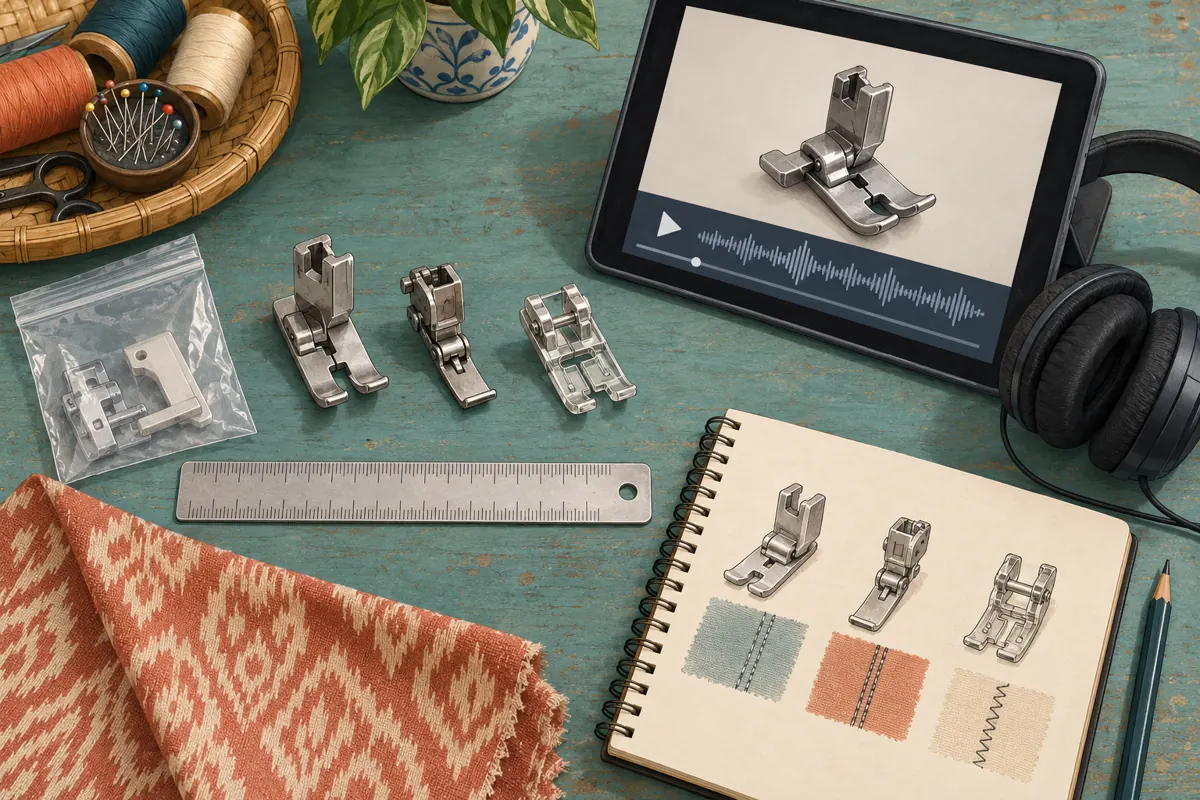
Before listening, gather the exact attachment shown, its packaging, the approved product description and any reliable compatibility documentation the shop uses. Add still images showing distinguishing features. A reviewer should not have to guess which shiny metal part appears halfway through the clip. Keep similar attachments physically separated during the review.
Create a short reference sheet with the product identifier, the preferred spoken name and the claims the shop can support. Distinguish an observed feature from a compatibility conclusion: seeing a screw opening does not, by itself, prove that a part suits a particular machine. Where the source information is uncertain, mark it for clarification before translating. A polished translation of an unsupported claim remains unsupported. Use the same reference sheet when staff answer enquiries so the video and the sales conversation describe the same item.
4. Prepare the original speech for checking
Review the original recording before evaluating another language. Listen for unfinished sentences, names spoken over machine noise and pronouns whose meaning depends on a hand gesture. Replace an ambiguous script such as 'this one works with that' with a specific description during production. Leave enough space between naming an attachment and moving to the next one.
YouTube's official introduction to automatic dubbing acknowledges that translations and generated voices can be imperfect. For this shop workflow, treat understandable source speech as the starting point, not proof that the resulting translation is correct. Write down each important claim in ordinary language. If the speaker gives both a measurement and a fitting limitation in one rushed sentence, separate those ideas in the next recording. A reviewer can then identify whether the translated version preserved both statements.
5. Set a review gate and identify the track
On desktop, YouTube documents manual review under Settings, Channel, Advanced settings. Enable Manually review dubs before publishing. To preview a track, open Content, choose the video, then Languages and the relevant language. Record the video link, track language, reviewer and review date.
For the proposed shop routine, assign one person to coordinate approval. That person need not speak every language, but must know who checked each track and what remains unresolved. Avoid a general note saying 'video approved' when only the original audio was reviewed. A hypothetical approval entry might say that the product identity has been checked but the compatibility sentence still needs a fluent reviewer. Keep that track on hold. Treat the video image, original speech and each translated track as separate items requiring an explicit decision.
6. Listen for identity, numbers and limiting words
Make the first listening pass about product identity. Ask the reviewer to describe which attachment the voice names at each change of shot. Compare that description with the physical part and reference sheet. A familiar everyday translation can still be unsuitable if local buyers use it for a different sewing accessory.
On the second pass, check every number together with its unit and purpose. In a hypothetical script, 'five millimetres' might describe a demonstrated setting, not the attachment's overall width. Record what the number measures, rather than checking only that five remains five. On the third pass, concentrate on limiting words: only, not, may, requires and separately. Losing 'not' can reverse advice; losing 'requires an adapter' can remove a condition that affects the purchase. Flag meaning changes before minor differences in style or accent.
7. Compare the audio with the visible action
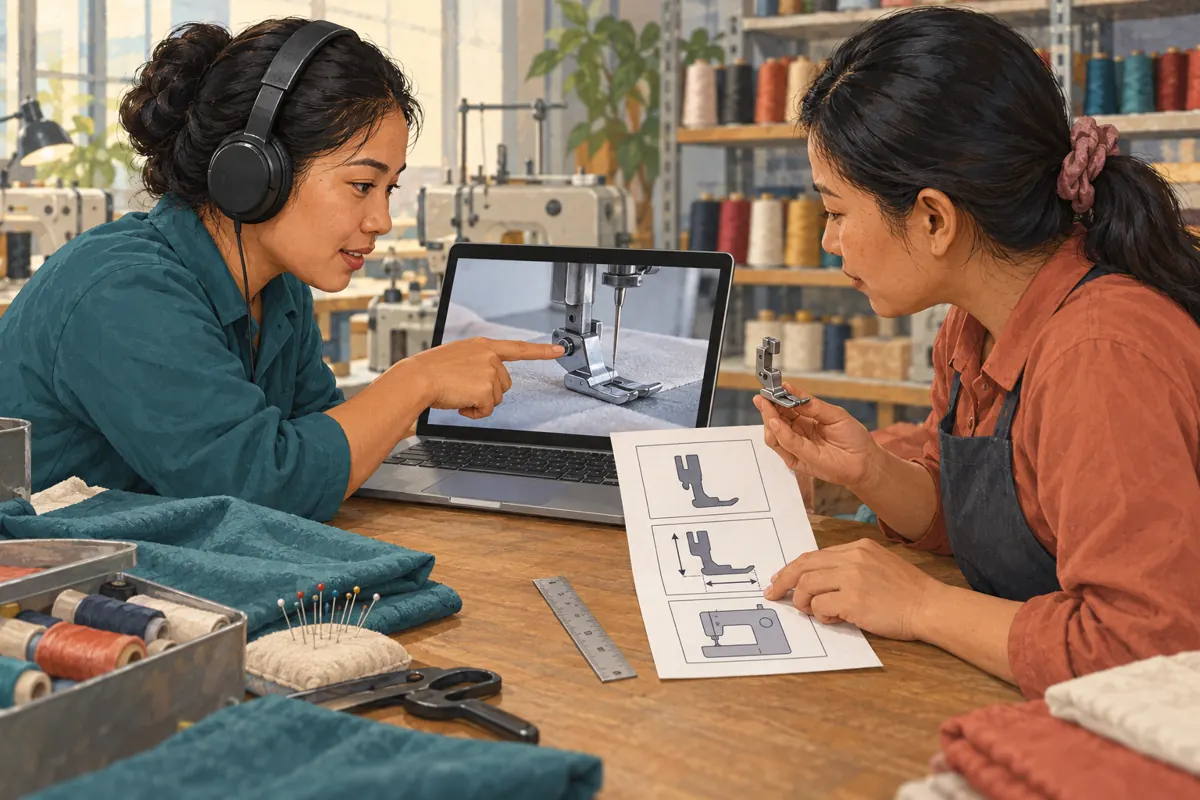
Watch the full video while listening to the selected track. Look for a sentence naming one part while the presenter has already picked up another. Ask whether a viewer arriving at that moment could connect the spoken explanation to the wrong object. A translation can be accurate in isolation and still be confusing beside the moving image.
Use timestamps to record problems precisely. In a hypothetical review note, write 'the voice names the narrow attachment while the wider one is held up' rather than 'translation feels wrong.' Include the intended meaning and the visible evidence. Then play the sequence on an ordinary phone speaker as well as headphones. This is a practical comprehension check, not a scientific audio test. If a crucial distinction is difficult to hear, strengthen the explanation in future production and withhold any track whose meaning remains uncertain.
8. Decide whether to release, hold or withdraw
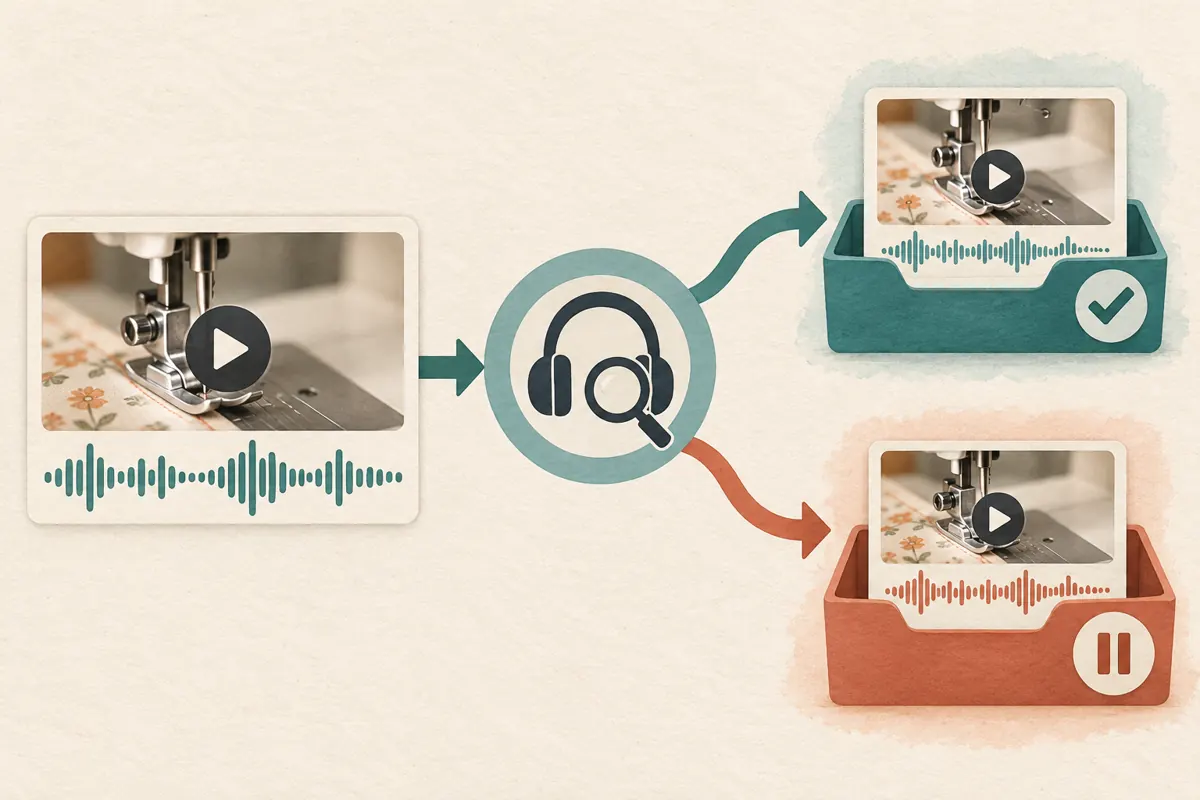
Use a clear decision rule: release a track only when a competent reviewer can confirm the important product statements. Hold it when a number, part name or compatibility condition remains uncertain. If the original demonstration itself is wrong, correct that underlying content before spending more time on translation.
YouTube says automatic dubs cannot be edited directly. Its audio controls offer Publish, Unpublish and Delete; unpublishing allows later republication, whereas deletion does not. Choose the action deliberately rather than treating those controls as interchangeable.
For the shop's internal record, write the reason for the decision and the next owner of the task. 'Hold pending confirmation of the adapter requirement' gives a colleague something concrete to resolve. Do not approve a questionable track merely because promotional work has already been scheduled. A deadline does not settle an unresolved product statement.
9. Keep SMM service evaluation separate from audio approval
The supplied public catalogue includes the exact listing 'YouTube Like ~ Max 100k ~ 50k/days ~ Instant ~ 𝐍𝐎 𝗥𝗘𝗙𝗜𝗟𝗟'. Its name presents it as a YouTube likes service, but the brief supplies no description. The quantity, speed and refill wording are catalogue labels, not independently verified delivery facts. Nothing supplied describes translation, dubbing review or Cambodian audience verification.
A service completion record cannot demonstrate that viewers heard the correct measurement or understood the fitting limitation. Purchased engagement is not evidence of genuine interest, sales, advertising delivery or Cambodian users. YouTube's fake engagement policy prohibits artificial increases in engagement and warns that a hired promoter's actions can affect the channel. Reject any proposed method that violates that policy. For this task, spend review effort on accurate content and legitimate distribution; do not use a likes order as an acceptance test for the translated video.
10. Promote the checked explanation and handle enquiries
Build the promotional message around the question the demonstration answers. A hypothetical message might explain that the clip compares attachment shapes and asks customers to send their machine model before requesting a recommendation. Avoid adding broader compatibility promises that the reviewed video never made. Keep the same product identifiers in the post, enquiry response and stock notes.
When someone reports confusing speech, ask which language they heard and where in the video the confusion occurred. Record their description without treating it as conclusive proof of a translation fault. Reproduce the issue with the reviewer and compare it with the reference kit. Where a genuine error affected an active enquiry, provide the corrected information directly in that conversation. Do not assume that changing public content automatically informs someone who has already watched or saved the earlier explanation.
11. Avoid mistakes that make the review unreliable
The most common shortcut is approving a track because its voice sounds confident. Another is asking a bilingual colleague to check technical terminology without showing the actual part. Language ability and product knowledge solve different problems; combine them when one person does not have both. A transcript can support the review, but the listening task also needs the picture and timing.
Keep the final review note short enough to use again: video, language, claims checked, unresolved issues and decision. Revisit it when a product claim changes or someone identifies a specific discrepancy. Compare later enquiries for recurring misunderstandings, such as customers naming the wrong attachment. Treat those observations as clues for improving the explanation, not as a measured sales effect of dubbing. A useful review ends with a clearer purchasing conversation, even when the right decision is to leave an additional track unpublished.
Frequently asked questions
Should a Cambodian shop record in English just to obtain automatic dubs?
Choose the original language around the people the demonstration is meant to help and the team's ability to explain the product accurately. Recording in a less comfortable language solely to obtain more tracks can introduce ambiguity at the source. A clear Khmer demonstration may serve the intended customers better than several unreviewed translations.
Can someone who speaks the target language approve the track without knowing sewing machines?
They can assess ordinary language, but technical approval also requires product knowledge. Give them the reference sheet and pair them with a knowledgeable staff member. Ask them to explain the translated claim back in plain language, then check whether that explanation matches the actual attachment and supported fitting conditions.
Is one incorrect measurement enough to hold an otherwise good track?
Yes, when that measurement could affect identification, selection or use. Review decisions should reflect the consequence of an error, not the proportion of sentences that sound correct. Record exactly what the number describes and what needs correction. Do not expect customers to notice a contradiction and resolve it themselves.
Do more likes show that the translated explanation is understandable?
No. A like does not identify the audio language heard or establish comprehension. Purchased likes provide no such evidence either. A more useful practical check is whether a reviewer can correctly identify the part and restate the fitting limitation. Customer questions can reveal confusion, but they still need investigation.
Explore the current service catalogue, create an account, or ask a specific question through support tickets.
- YouTube Help: Use automatic dubbing
- YouTube Blog: Break down language barriers with auto dubbing on YouTube
- YouTube Help: Fake engagement policy
Prepared with AI assistance. Illustrations explain the workflow and do not represent customer results.